

Blind Faith
GH on a remarkable centenary


Blind cricket enjoys the distinction of being the world’s oldest sport for the disabled, and a pioneering Australia innovation. It was purportedly devised at a Prahran hostel by two factory workers who had lost their sight, and improvised a tin containing rocks to hit. After an upsurge of interest during the 1920-21 Ashes, it was popularised by Tatong-born Albert Worrall, a lifelong railwayman and forty-year committeeman with Melbourne’s Association for Advancement of the Blind. And this Easter weekend marks a landmark in its development: a hundred years ago today was concluded the first interstate match, involving a team of Victorians visiting a team of South Australians at the Queen’s School on Barton Terrace in North Adelaide.
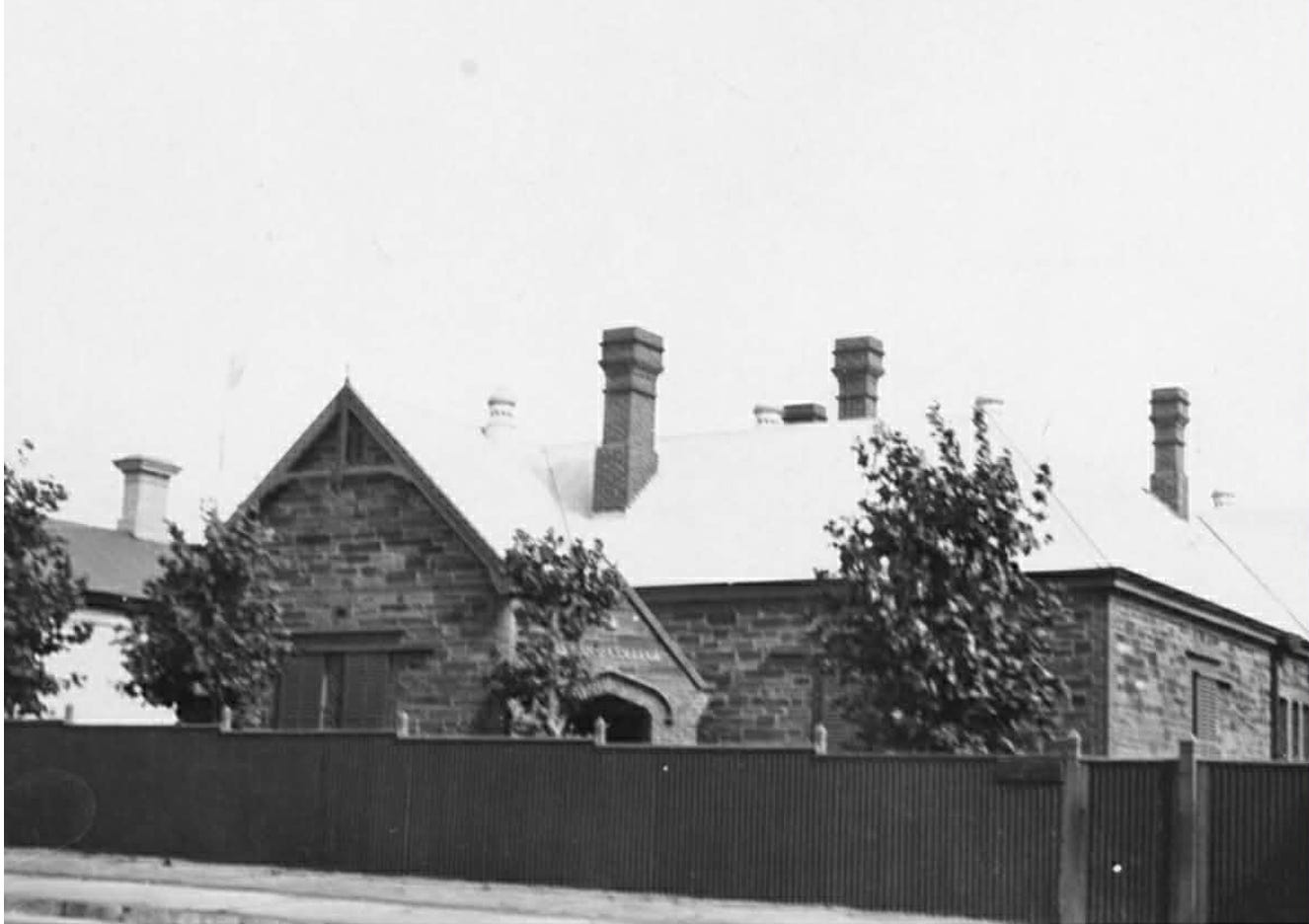
It had been quite the project, the Victorians spending twelve months raising a hundred quid by social functions, raffles and charging a shilling at the gate to their three-team competition, consisting of Worrall’s Association, the Royal Victorian Institute for the Blind and The Braille Library. The last of these were the newly-crowned champions, their victory having inspired the McGonagall in their ranks to a grand homeric ode beginning…
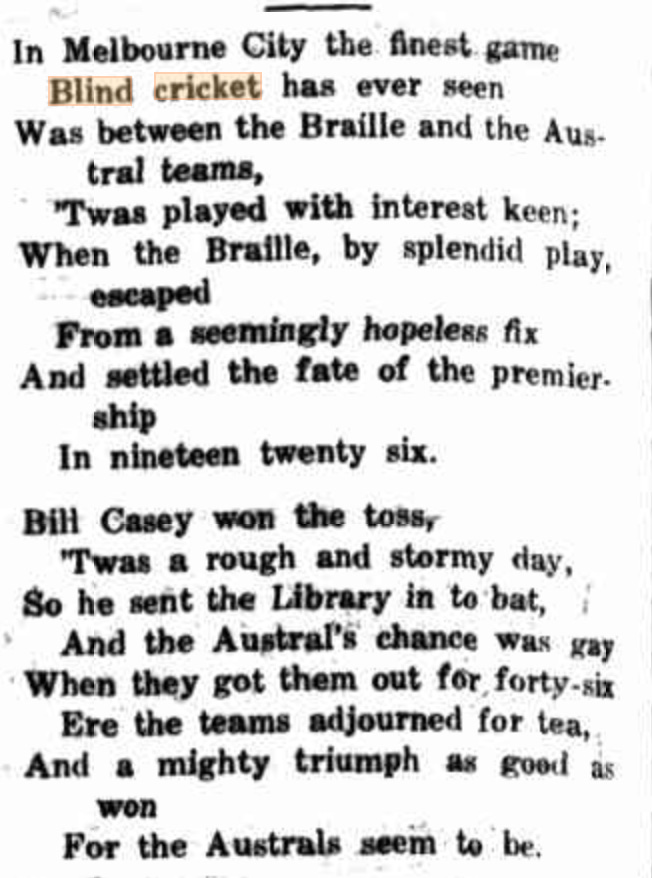
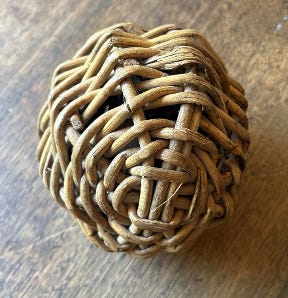
Do check out the rest, it’s awesome. Anyway, five men from each team were chosen - six completely blind, nine partially blind - and accompanied on their rail journey by Worrall, two sighted umpires and a sighted scorer. They brought with them their remarkable woven cane ball containing pieces of metal.
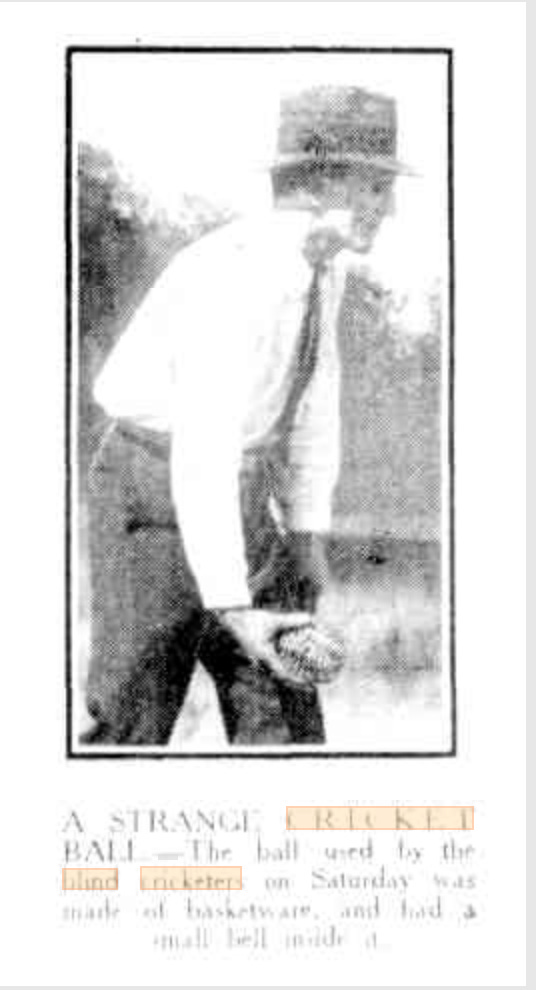
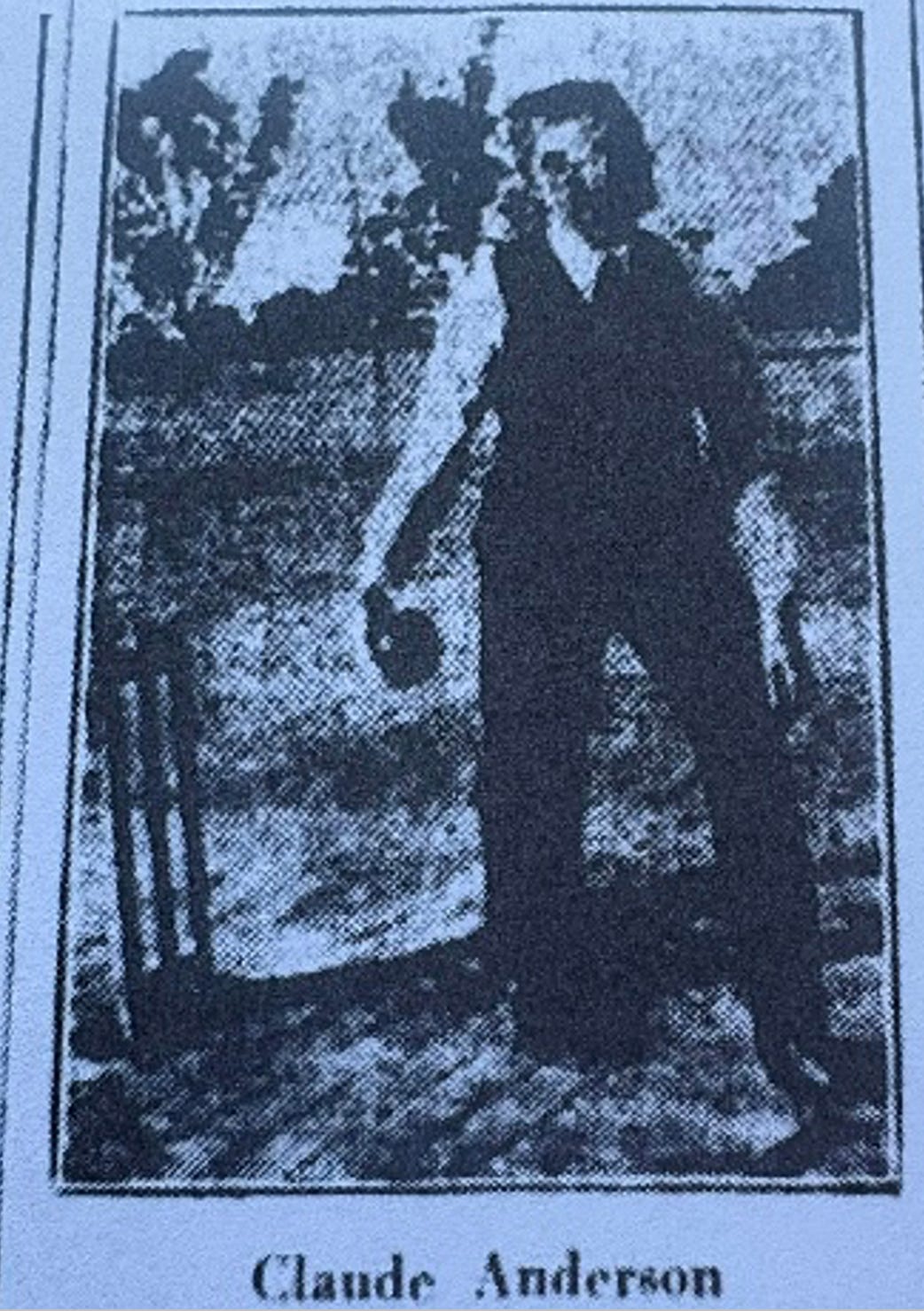
The Adelaide Advertiser acclaimed their visitors as ‘the first throughout the whole blind world to go outside its own State or country’, and reported their captain Claude Anderson to be ‘the best all-round player’ in the state.
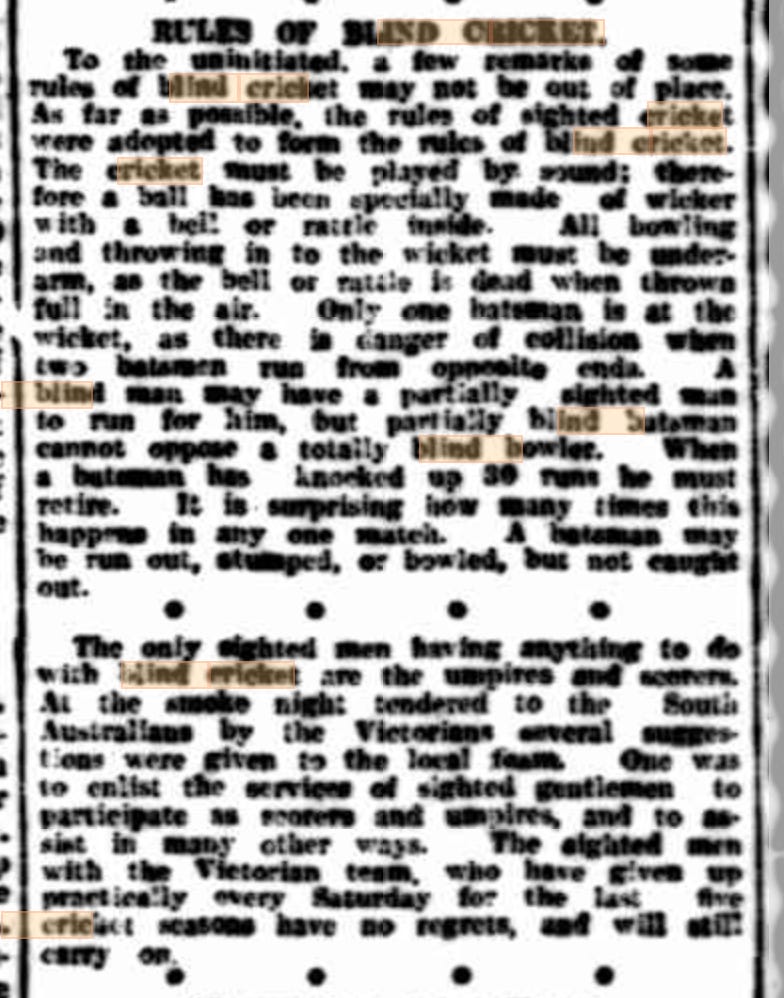
The school ground was small, with thirty yard boundaries, but in only a few years the game had been considerably codified. The sixteen-yard matting pitch featured a white line at halfway - anything that landed further up was a no ball, because the ball in flight made no sound. As today, statutes regulated the commingling of the blind and partially blind: a partially blind bowler could not bowl at a totally blind batsman but vice versa was permissible; blind batters had partially blind players as runners, and the game was single ended to minimise risk of collision. The metal stumps took a drubbing, as batters could only be out bowled, run out or stumped.
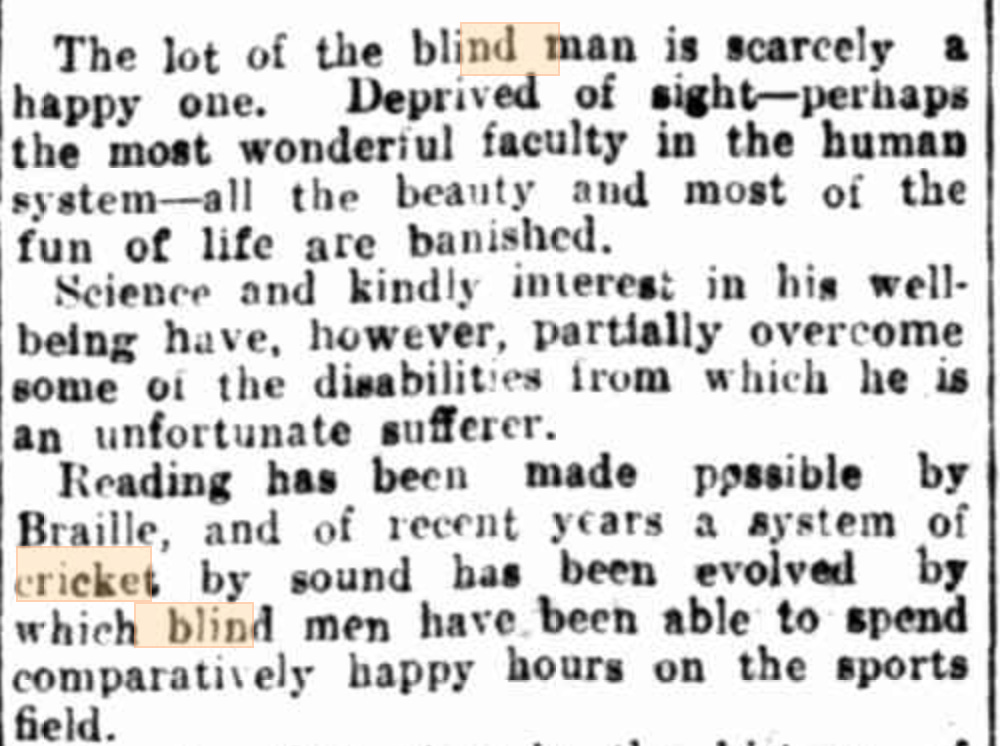
There was coverage as far afield as Sydney and Kalgoorlie, and the Adelaide papers took considerable interest. The News report enjoyed the enlightenment of it all.
The Advertiser went into detail about the rules.
There wasn’t much coverage of the actual game and no individual scores, although the visitors, not surprisingly, prevailed, making 168, and rolling their hosts for 39 and 66. I am indebted to Phil and David Penn of Blind Cricket SA for their researches: they explain that the locals were drawn mainly from North Adelaide’s Royal Institution for the Blind, and had had the benefit of only a couple of practices. Superintendent S. E. Fuller was the team manager.
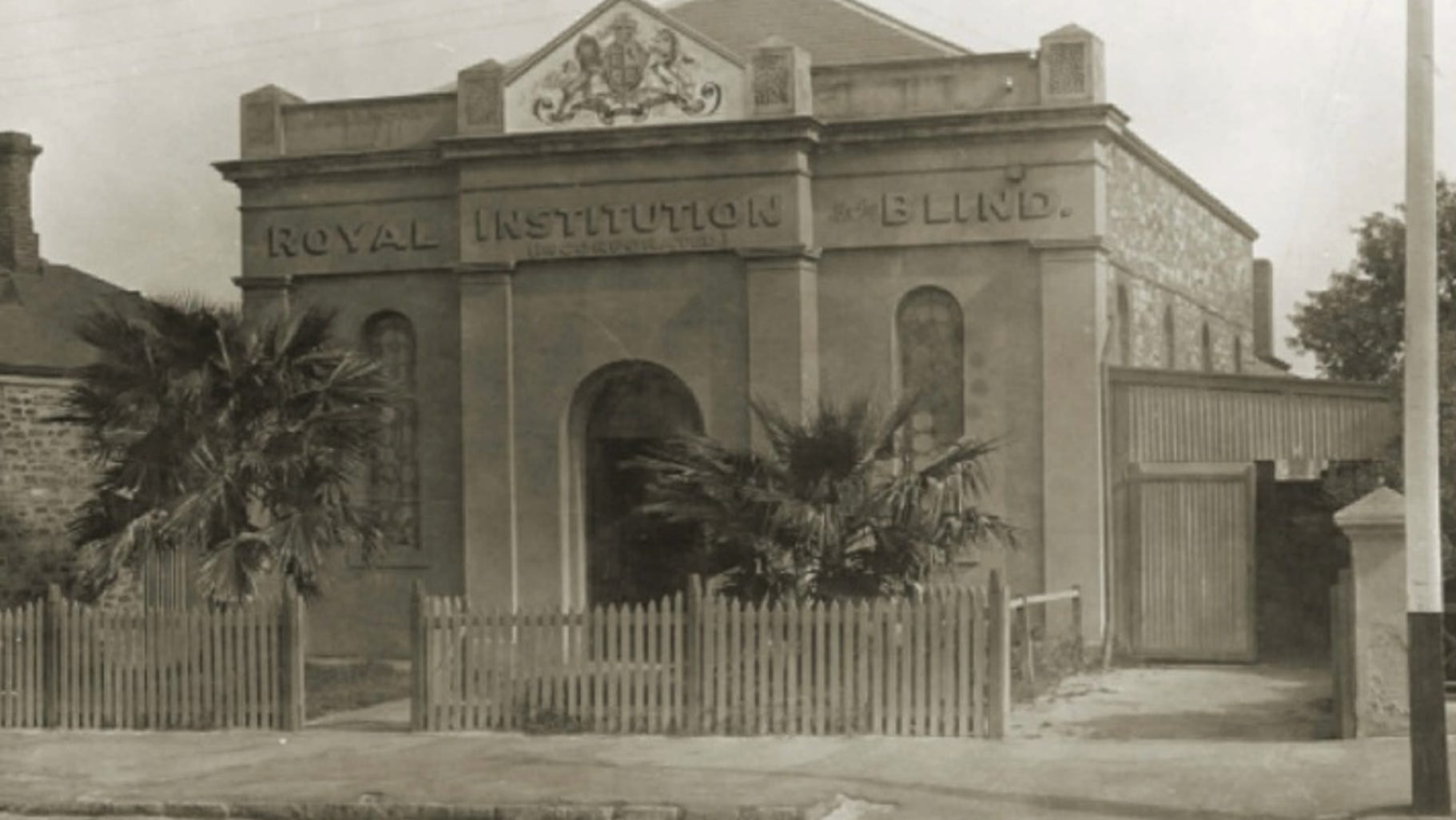
The game was described as having ‘opened up an avenue of unlooked-for possibilities’, and by the following season there was full-fledged competition in Adelaide. The line of descent to today, in fact, is pretty direct. Shortly before his death in 1952, Worrall promoted an interstate carnival by establishing a National Blind Cricket Council. Its successor body Blind Cricket Australia is today one of ten members of the thirty-year-old World Blind Cricket Council. Not until 2004 did Australia play England in a blind ‘Ashes’ - Australia won the most recent instalment in November 2024. Next stop: perhaps cricket at the 2032 Paralympics in Brisbane. Gaz is on board…..
Thanks, Gideon. I am a former Australian blind cricketer having retired a few years ago but still play for NSW. Like any sport, the history of Blind Cricket helps guide its future. Cricket Australia do a wonderful job organising and promoting the National Cricket Inclusion Championships every year. We could not have a better supporter than Gaz.
As a person who has been lucky enough to wear the baggy green, I am deeply concerned that CA have not committed to ongoing future funding for Australian teams and international tours for blind, deaf and intellectually disabled Cricket and cricketers.
Before we dream of Blind Cricket in the Brisbane Paralympics, would love you and Pete to ask CA about what resources they are investing in making cricket a truly inclusive sport from the grassroots to supporting blind, deaf and intellectually disabled cricketers to represent their Country.
A lovely article Gideon. Fascinating history. I could not resist a search of the BNA and found an article from June 1889 describing blind cricketers from Henshaw's Blind Asylum watching a County match at Old Trafford. 'They ... play cricket on their own account, the ball being formed of wicker-work with pieces of tin or bells within, which enable the players to judge the whereabouts of the article.' There is also an article from 'The Christian Union' July 1890 describing students at the college for the blind at Worcester (The College for the Blind Sons of Gentlemen) playing cricket 'habitually' with a long description of how they play the game.