

C'mon Cazaly C'mon
Andrew Faulkner recalls sport's first brush with popular music

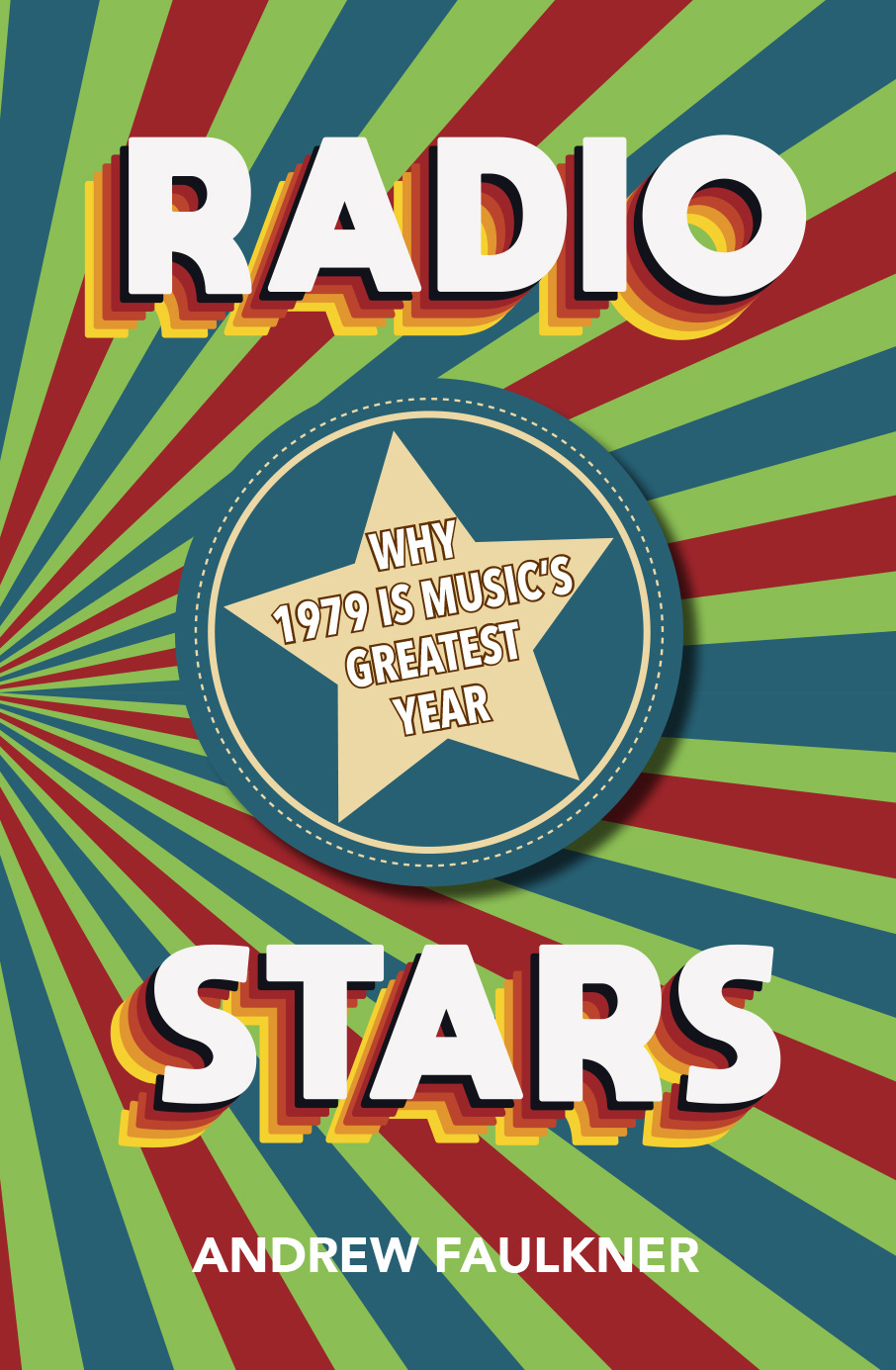
Friend of Et Al Andrew Faulkner has a great new book out: Radio Stars – Why 1979 is music’s greatest year. In this exclusive extract, he recalls how this week, in an Australian summer a long time ago, C’mon Aussie C’mon hit the charts.
January 8, 1979: Imran Khan is man of the match the day Tony Greig’s World XI lays the West Indies low. Mighty men are humbled; Clive Lloyd, Gordon Greenidge and Desmond Haynes all fall in single figures, so diabolical is Kerry Packer’s artificial pitch dropped into Melbourne’s VFL Park. Viv Richards makes a duck. The star-studded but low-scoring contest is insignificant in the grand scale of cricket’s revolution. An event of far more import occurred earlier that same day – the day that C’mon Aussie C’mon hit the charts.
Conceived in 1978 as a minute-long, promotional jingle for Packer’s rebel cricket competition, C’mon Aussie C’mon was so well received it was padded to two minutes, 20 seconds, and released as a single. It became the soundtrack of the 1978/79 Australian summer, and was a significant factor in World Series Cricket’s success … success that forced the Australian Cricket Board to parley for a truce, and ultimately led to rapprochement. By the time C’mon Aussie C’mon started charting, the ACB was haemorrhaging money and pride in equal measure. When it reached No 1, on February 12, 1979, the peace talks were already in train. Packer had won the cricket war.
C’mon Aussie C’mon is all about the rhymes. The Mojo advertising agency’s Alan Morris and Allan Johnston must have had tremendous fun rhyming “Test” with “best” and “wickets” with “pickets”, and even more sport with the more marginal rhymes: somehow they bolted together “runs” and “gum”. Never mind, every one of the shirtless, sunburnt and Scoop-shorted kids in the television ad knew every word of C’mon Aussie C’mon. The music was almost incidental to the lyrics and the film clip featuring Hookesy doing push-ups and Max Walker’s hijinks and Gary Gilmour wielding “willow like an axe”. The rousing chorus bordered on jingoistic, but wasn’t meant to be taken too seriously. And 1979 was a time before jingoism collected its connotation.
Its purpose served, C’mon Aussie should have shuffled off to the pavilion to join the long ranks of 1979 one hit wonders. But wait. Advertising agencies are peopled by highly creative types, even the ones without ponytails, and cricket’s armistice generated an influx of establishment players – raw material for new rhymes. The new song could mine speculation about selection: “For openers we’re looking pretty good,” Mojo sang. “With bats like Darling, Hilditch, Laird and Wood.” Even better, the despised England – having defeated the depleted establishment side 5-1 the previous season – was touring, so Mojo assumed full Boxing Kangaroo-waving-a-green-and-gold-flag mode: “Gentlemen, we’ll tan your flamin’ hide.” If all that wasn’t enough to work with, the West Indies were back too, fielding one of the greatest sides ever. The Windies were co-opted into the revamped song – along with steel drums and a sax solo – as half of a cringey call-and-response routine with Mojo’s Johnston. Johnston: “Wheel ‘em in, we’ll whack ‘em for a six.” Un-named West Indian: “Don’t make me laugh, you’re giving me the stitch.” Johnston: “What about our pacemen?” Un-named West Indian: “Brother we’ll disgrace them.” Both: “Let’s sort it out when we get on the pitch.” C’mon Aussie C’mon – The New Era entered the charts on Christmas Eve, 1979, and was almost as successful as its predecessor. So the year ended as it started, with the nation smearing on zinc and chanting C’mon Aussie.
In 1979 Australia, cricket and football cast a passing eye at the other over the twin fences of spring and autumn. The sports were respectful rather than fraternal neighbours, although asking next door for a cup of sugar or to put the bins out might have been a stretch. Each was allowed its time, with football beginning in the first week of April and finishing at the end of September. This was a blissful time of seasonal sport, before the AFL monolith and before Australian football encroached at both margins. In staging World Series Cricket, the summer game had showed the way with promotion and marketing, and football was jealous. We want a song too, the Victorian football tsars said over burgundy and beefsteak in the MCC Committee Room. Enter Mike Brady, on a flat top, acoustic guitar slung and bound for a dais in the middle of the MCG. “Well you work to earn a living …”
Cricket and football might have maintained a respectful separation, not so Australia’s TV networks. C’mon Aussie C’mon had been a bonanza for Packer’s Channel 9, so the football channel in Melbourne, Seven, commissioned singer/songwriter Brady to write a footy song. He chose as his subject an early-20th century St Kilda and South Melbourne ruckman, Roy Cazaly, whose high leaping led to the catchphrase Up There Cazaly. The catchphrase became a battle cry in World War II’s desert campaigns, and featured in a Ray Lawler play, but faded from memory until reheated by Brady. Like C’mon Aussie C’mon, Up There Cazaly started as a jingle but after a warm reception was made into a two minute, 40-second single. It sold 50,000 copies in its first three weeks and spent a week at No 1 in August, usurping Racey’s Some Girls before being usurped by My Sharona. By season’s end Up There Cazaly was the biggest selling home-grown single in the nation’s history. It earned Brady a photo in US magazine Cash Box, the unlikely pop star holding a gold record to match his sparkling smile.
Up There Cazaly is grand, majestic and anthemic: Brady and the other half of The Two-Man Band, Peter Sullivan, deploy thunderous kettle drums, key changes and possibly the last recorded example of a vibraslap in a No 1 song. (A percussion instrument popular in the 1960s/70s, the vibraslap makes a sinister whirring sound, routinely heard during a standoff at a corral or deserted railway siding. In Australia, it rattled menacingly when the bad guys were lurking in dark alleys in Homicide/ Division 4/Matlock Police, or when Skippy was forestalled in her mission to save Sonny from a disused mine by a particularly snaky Eastern Brown.)
Up There Cazaly evoked an emotional response. It resonated because it was about community. The clip starts with Saturday afternoon trams disgorging fans, policemen directing traffic and a Salvo sipping coffee from a mug. You work all week, Brady observes, but on the weekends you commune with your kin because “the footy wins hands down”. Brady wasn’t much of a footy person, but sometimes it takes a disinterested party to divine the truth. Brady found poetry in the mundane and routine. Yet, Up There Cazaly’s magic is found in the stratosphere: in its celebration of the game’s greatest feature – the high mark; in its deification of the Australian football aerialist. Most of the clip is a succession of ‘screamers’ in slow-mo, featuring noted high-fliers such as Trevor Barker, Royce Hart and Billy Picken. The irony is in 2025 football has never been more popular, but the high mark has declined in a highly-regimented game. A similar irony is found in another genre favoured by the clip’s producers – fights. There’s even a trainer slamming a ball into an opposing player’s face. These days he’d be banned for life. Or longer. Football as depicted by Brady no longer exists.
Radio Stars, $35 plus postage, is available at Dillons Norwood, or from the author at andrew.faulkner@bigpond.com. You can follow Andrew on X (@AndrewFaulkner9) or look him up on Facebook.
Nice Faulkie, really nice. Up There Cazaly just resonates more with me, but maybe it’s that it lacks that overt jingoism you mention. The swinging arms in the video are disgraceful but gee do we miss the marking or what!!?? I was shocked that Up There Cazaly and My Sharona are similar in age. I’ll email you about copies.
Glad my cousin got a mention 'keeper! Ossie Vincent (Carlton) throwing the ball in the face of Richmond's "Swampy" Patterson. Keep up the good work AF