

Cricket in a Time of Terror
GH wonders what the game can do

Cricket Et Al draws most of its readership from people in earnest about the game, its issues and its personalities. Yet I never lose track of the satisfying fact that cricket has another following, perhaps even larger, among people who move in and out of it - who derive happiness from cricket simply being, like an old if seldom-seen friend on whom they might occasionally drop in.
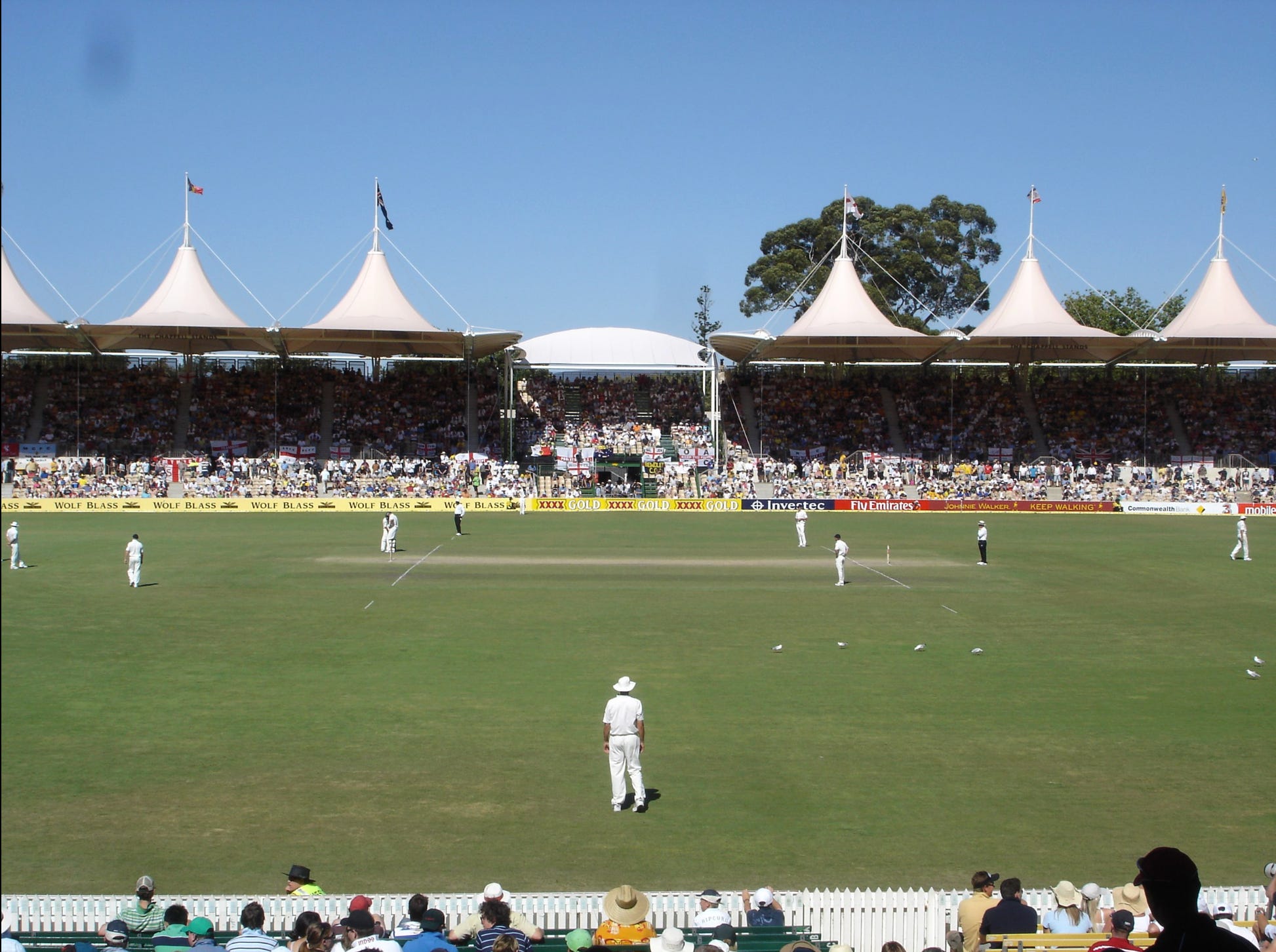
This community is a reserve of great strength, and to the game, I think, something distinctive to it. Australian rules’s self-important demand for constant attention has dampened my enthusiasm for it; I simply don’t have room in my life for that much football. The cricket-industrial complex aspires to the same kind of broad-spectrum, multi-platform dinning of eye and ear - all the better to monetise you with, my dear. But much of our collective association with cricket defies that. People are content with their backyard games, their childhood memories, their half-remembered glimpses and anecdotes of the Chappells, Lillee, Marsh, Viv, Botham; whether they’re across global cricketing events in detail or not, people are cheered by the straightforward idea that cricket is continuing somewhere. Thus, perhaps, the popularity of Travis Head, whose shaggy features and piratical gait are perfect touch points for nostalgia.
I was reminded of this most strongly by the public reaction to the death of Philip Hughes. He, too, was an Australian archetype - the untutored talent from the bush. He, too, had a certain innocence, a distinctive cheek and fun. As official cricket was transfixed and paralysed by the tragedy of his loss, the public took mourning into its own hands. Those bats in the window. Those spontaneous ceremonies before our weekend games. Nobody on high mandated them; they just happened, out of a felt collective need to do something, after a terrible irruption on a beloved continuity.
Which brings me, in roundabout fashion, to something else terrible that has happened. It has not happened in cricket, but cricket is positioned as sport’s first responder, as regretably often seems to happen. Being so central to summer’s pageant, cricket is regularly buffeted by concurrent events, including natural disasters calling forth responses, from 1967’s Bushfire Test to 2005’s Tsunami ODI. When last there was a calamity such as Sunday’s in Australia, Port Arthur was marked by a cricket match. Cricket Australia is even now mobilising ahead of Wednesday’s Ashes Test for some suitable commemorative gesture - CA’s CEO Todd Greenberg, a Jew from Sydney, could easily have been at that Hannukah celebration. Adelaide, furthermore, epitomises the match as much as about getting together as the play, the cricket providing a pleasing soundtrack to a social occasion, an opportunity to connect with memories and reflect on summers gone. It invites us now to reflect on the horror of an Australia where getting together is, for a particular community, shockingly dangerous.
Not really until the last five years had it occurred to me how many Jewish friends I have. It had never been integral to our friendships. But especially since 7 October 2023, they have felt their Jewishness more keenly, and I’ve been privy to their discomfitures and anxieties. On Sunday, the eight-year-old son of one of these friends played his first game of competitive cricket and took his first wicket - the proud father sent me a video, his laughter audible in the background. This father must now explain to this son why Australia harbours people who would be proud of killing them both. This son will go forward in cricket knowing that the day of his first game was the gravest day in the history of his people in Australia. The Bondi killers are not just responsible for sixteen deaths. They have succeeded beyond their imaginings, in bequeathing decades of fear, of grief, of sorrow and terror.
What does cricket do in the circumstances? I recoil from those columns about what must now happen in any context - especially in this instance, I can’t even pretend to know. First thing this morning, I was invited by the ABC to talk about how sport could help ‘get us through these terrible events’. Really, I thought? They’ve barely happened and we’re already ‘getting through’ them? How can we even be thinking about sport at such a time? So I declined, and instead visited another Jewish friend, who’d sent her kids to school that morning worried inevitably about what other kids might say - it is not so long since she had a Star of David scratched in her car door. ‘Why do people hate Jews so much?’ she asked. Something else I could not answer.
It’s impossible for any single event to provide solace in a time like this, and it is a quite unfair burden to ask a mere game to bear. And yet it might have to, for we are searching for something of Australia’s best to compensate us for its worst. So what I would say, at risk of sounding didactic, is that the good order and fellow feeling of a Test match in this country does not come about by accident. It reflects something of what the historian John Hirst called our ‘democracy of manners’, of our knack for rubbing out difference. That capacity can make us superficial. It can render us insensitive to the sufferings and exclusions of others in our midst. Yet most of the time, that unspoken agreement to leave disagreements at the door, to interact as we find each other, is a source of strength. In that sense, in allocating space, allowing freedom, checking excess and insisting on mutual consideration, a sporting crowd can model healthy civic engagement. And on Wednesday, that bigger, less ardent, more diffuse audience of Australians comforted by the feelings of cricket going on, will be watching for the reassurance that we can.
Your thoughtful article took me back to a decade ago, when Robert McLiam Wilson penned a piece in the wake of the terrorist attack in Paris, which I still regard as the most moving piece on cricket that I have ever read. I can but commend it to you all https://www.theguardian.com/sport/2015/nov/20/the-solace-of-an-australian-summer-when-cricket-brought-hope-and-light
Thank you Gideon for your balanced and compassionate piece. Your thoughtful tone creates space for reflection. I am holding onto the hope that cricket can offer some light.