

Cricket In An Age of Distraction
PH scans the media horizon

For a while now, I’ve been interested in a paradox of my cricket watching - that I can sit absorbed through multiple days of Test cricket, yet cannot watch an entire Big Bash League game. I get bored and listless; I fidget and multitask; I’m not a habitue of social media, so it’s usually a book, or music, or the siren song of email. But by the end, I’m thinking: did I actually see that? This is, I think, only partly a matter of taste or preference. T20 is replete with distractions, hyperbole and half-developed storylines. It is cricket for the age of continuous partial attention, lapped by the rising tides of sports gambling and related malpractice.
This aroused my interest in how others are partaking of the game. Although we remain wedded to the idea of the nation sitting down as one to ‘watch the cricket’, nothing has been the same since the advent of the smart phone. If it can destroy attention spans, literacy, childhood, young adulthood, and democracy itself, what chance did the communal experience of cricket ever have? So Et Al canvassed the views of friend of the pod Peter Hatzoglou, not only an extremely talented leg-spinner but a shrewd observer of the mores. With himself as a case study of a dedicated watcher and student of the game, I asked him to consider the implications of our changing habits of consumption, for administrators, broadcasters, corporates and the public generally. His piece, I think, is full of valuable insights. GH
Playing, watching and reading about cricket has always been a huge part of my life. But that experience is changing. Though I still consume about ten hours of cricket media a week, only four of those hours are spent watching live broadcasts.
The rest is in pieces: clips, social feeds, player content, highlights, podcasts and the familiar rabbit holes of X and YouTube. I don’t think I’m unusual, and I suspect many readers here will recognise this pattern. I follow the game closely, think about it often and feel invested in its outcomes. But am I clearly visible in the metrics collected at head office?

One of cricket’s headwinds, increasingly, is not reach but translation. Its most engaged consumers are consuming more than ever, just not in the ways that traditional economic and governance structures have monetised. The result is a widening fault line between attention and revenue, between where interest now lives and where value is still counted.
For much of its history, cricket has built its economics around scarcity. Broadcast schedules were fixed, and attention was comparatively abundant with less competition during leisure time. Who watched, and how, mattered less so long as rights values kept rising. Younger, mobile, international audiences were there, but peripheral to the core model.
That model is now under strain. Contemporary engagement is fragmented. It arrives in moments rather than sittings: a wicket, a six, a flash of brilliance or a confrontation like Steve Smith vs Babar Azam that lives longer online than it ever did on the field. These moments are consumed vertically and socially, often out of sequence and often without sound. For many fans, these moments are the match! Broadcast audiences disappear after the game, but smartphone consumption lives on. Cricket knows more about its audience than ever before, but in important ways understands it less.
None of this is to deny that crowds are strong or that television ratings have lifted in parts of the game. Engagement is broader than ever. The question is not whether the audience exists, but where its value now accrues, and most importantly, who gets to count it.
Podcasts or television shows can funnel fans back towards broadcasts, just as social media can amplify interest. Formula One’s Drive to Survive, about to enter its eighth season, is often cited here, and with reason. But the owners of those funnels are increasingly external: YouTube, Meta, Netflix. They set the terms of engagement, collect the data and retain the leverage. The funnel to broadcast may still work, but what happens if the funnel itself becomes the product?
Which raises a more basic question: who really owns cricket’s audience now? Is it boards and broadcasters? Is it platforms? Is it podcasters, meme pages, or players’ phones? Increasingly, players themselves function as distributors and translators of the game. Shows like Willow Talk (Alyssa Healy & Brad Haddin) or For the Love of Cricket (Jos Buttler & Stuart Broad) sit comfortably alongside the formal cricket conversation while operating largely outside its structures. Yet even here, control is partial. Players and podcasts are influential, but their reach is controlled by platforms whose incentives are not cricket’s own. Influence flows through algorithms and feeds, not scoreboards. In practice, ownership of the audience is more fragmented than ever, leaving institutions with a gap between monetisation and a reality they did not design.
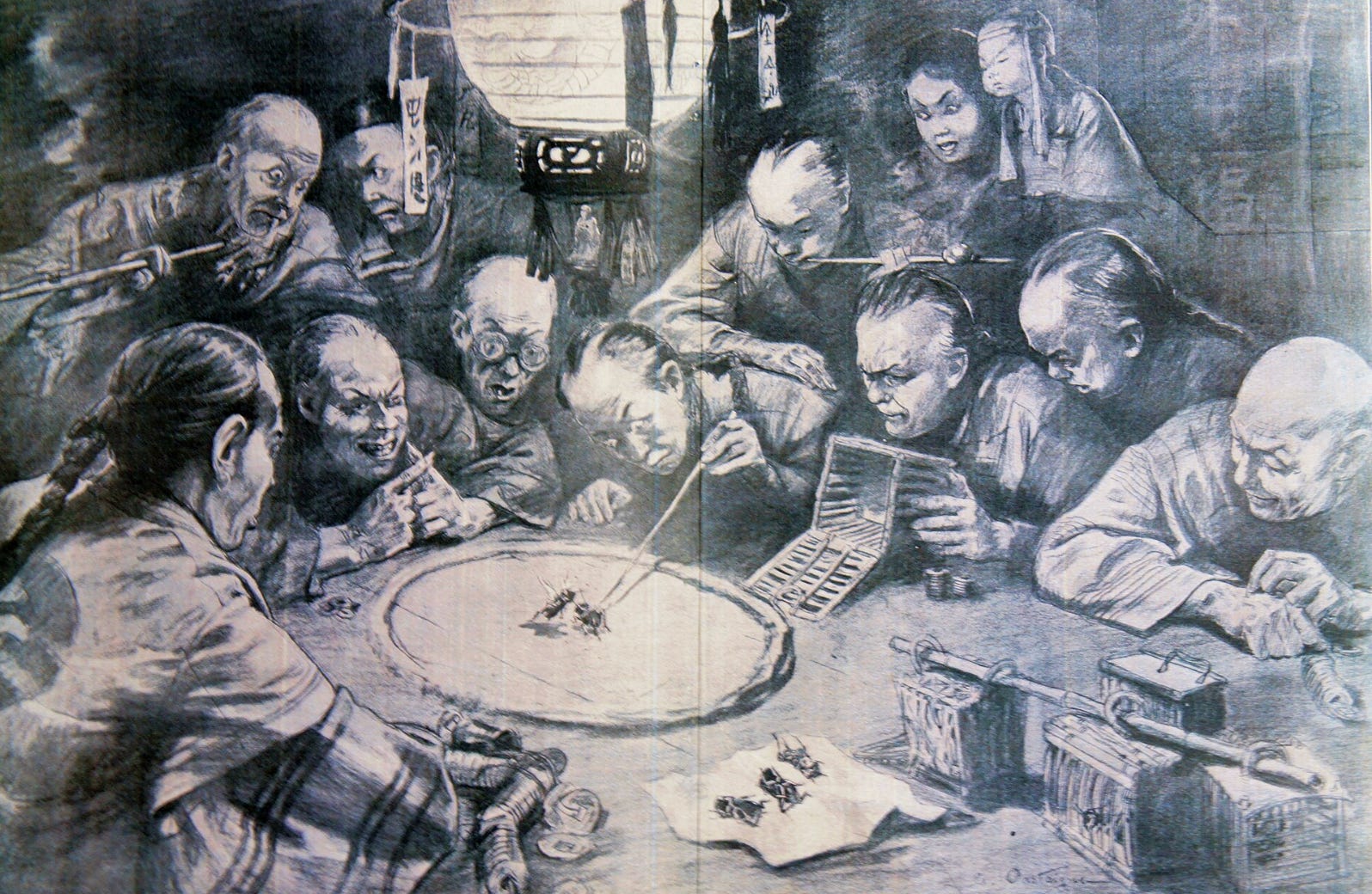
Into that gap has stepped gambling. Gambling has arguably become the most efficient bridge between fragmented attention and monetisation, extracting value from partial, distracted consumption. It works because it prices moments rather than minutes, intensity rather than duration. But it does so at a cost: moral hazard, regulatory capture and cricket quietly leaning against restraint of a social ill. This is where engagement, revenue and ethics collide.
There is an alternative, though it requires a shift in instinct. It involves owning the clip rather than clinging to the broadcast. In cricket, broadcast is the product and clips are treated as promotional residue - a habit inherited from an era of scarcity. But other sports have evolved. The National Basketball Association, for instance, treats highlights as primary inventory: moments are released quickly, shaped for the platforms where attention already lives, and sold as commercial objects in their own right. The clip is not merely a funnel back to the broadcast; for many fans, it is the game.
The platforms understand this. YouTube rewards moments rather than minutes and continues to siphon attention from pay television. Audio - the only media category still growing year on year in Australia (according to Deloitte’s recent Media and Entertainment Consumer Insights Report) - fits easily around distracted consumption. Cricket already produces enormous volumes of short-form content, but is it priced appropriately?
Owning the clip would not remove gambling from cricket’s ecosystem. But it would prevent it from being one of the only efficient monetisers of fragmented attention. It would require cricket to accept that some fans might not return to the broadcast - and to recognise that this is not a loss of legitimacy but a different form of participation.
The question, then, is whether cricket is prepared to design itself around how people increasingly consume it, or whether it will continue propping up old models with new dependencies - mistaking a failure of translation for a failure of interest.
Peter contributes to Perceived Pressure, a sport Substack. He’s heading here today. Good luck with the 5am start times comrade!
 | A guest post by
|
A T20 match can be reduced to highlights showing only 4's 6's and wickets. Seeing only highlights of a T20 game doesnt detract from the game too much. But i detest watching Test highlights as it takes away the build up to certain events and the tactics and counter tactics employed by batting and bowling teams as they struggle for supremacy. The slow burn when nothing much happens then lots starts happening all at once. A T20 match is a McDonalds Big Mac consumed quickly but without nourishment. A test match is a 10 course fine dining meal with shiny cutlery, matured wine, taste buds popping and occasional disagreements and arguments over the dinner table.
Loved watching PH play - an old player at MU CC - comparing cricket with literature - a Test match is like a novel - an ODI is like a short story- a T20 is like a comic strip