

Dizzy's Last Stand
GH on the nightwatchman's nightwatchman

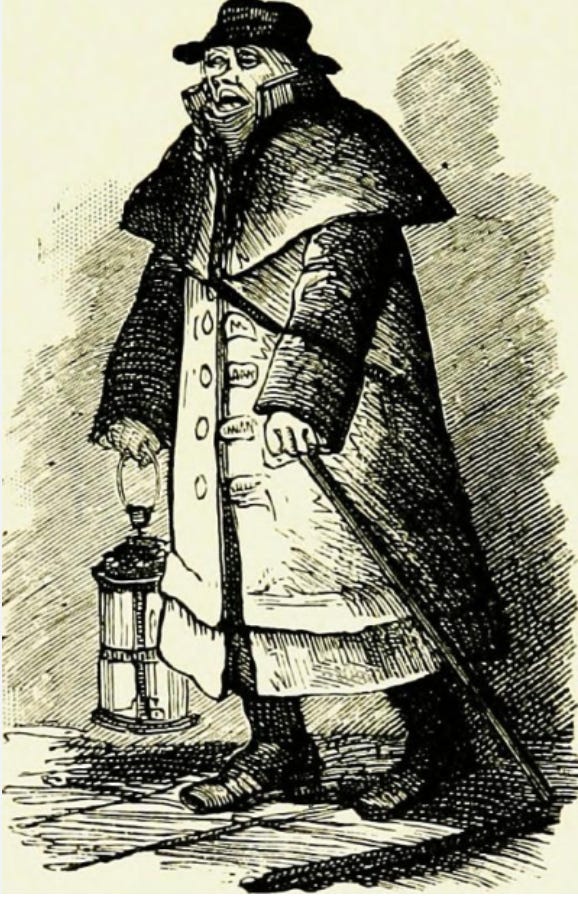
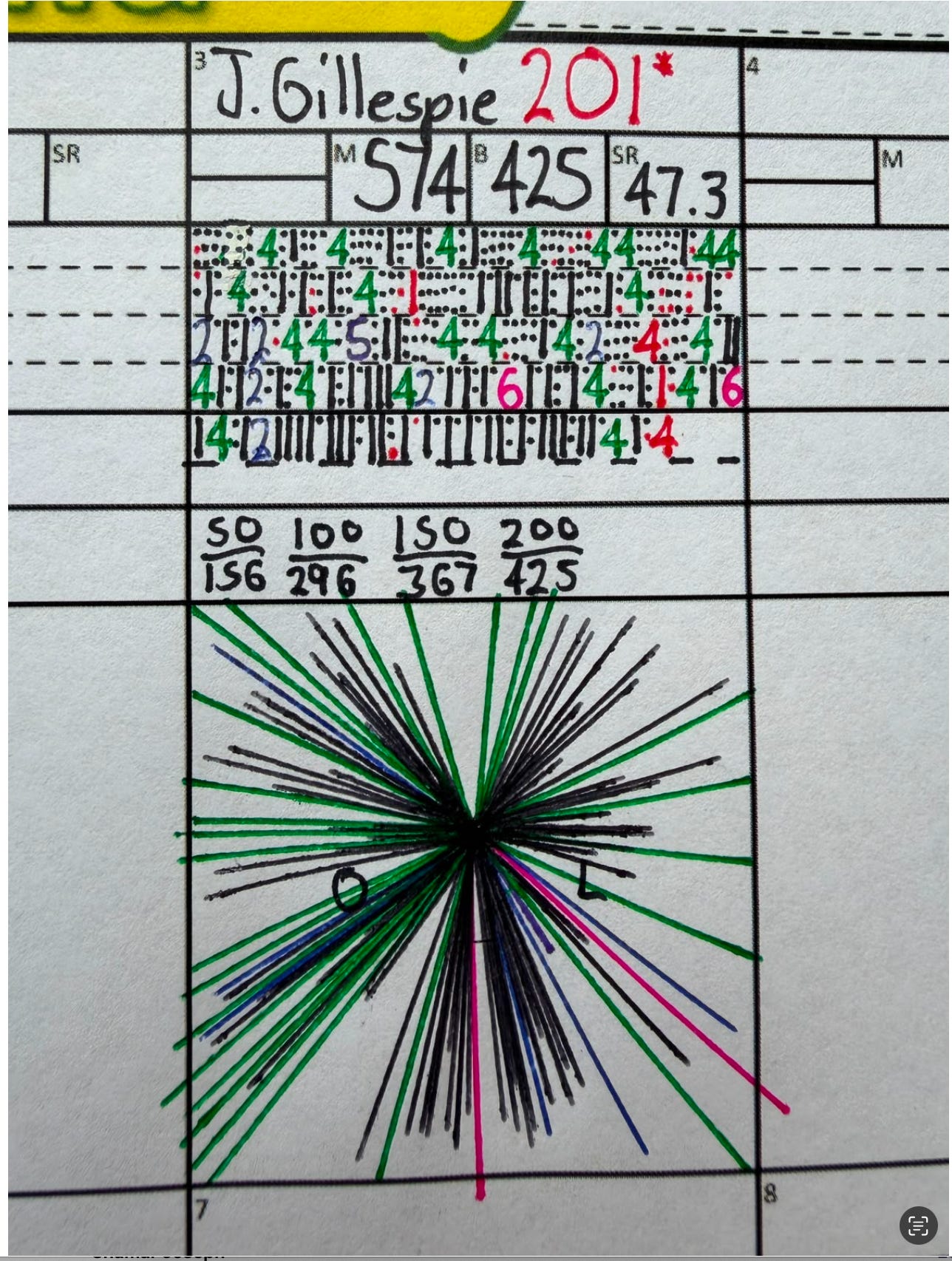
The emergence of a nightwatchman late in the day is usually cause for ambivalence, if not disgruntlement. It seems defensive. It is defensive. It can make two players look bad - the proxy, forced to fend for dear life, and the protected, made to appear timid. Greybeards will mutter that it ‘never works’, although there is evidence that nightwatchmen suffice more than two-thirds of the time, and outdo themselves on a fifth of occasions. Five nominal ‘nightwatchmen’ have made hundreds in Test cricket - Mark Boucher did it twice, which suggests, ironically, that he may have been undersold. And the imminence of Australia hosting Bangladesh in Darwin calls to mind what is certainly the most outlandish feat of the countries’ limited Test exchanges: Jason Gillespie’s undefeated 201 at Chittagong just over twenty years ago, which Et Al’s Thomas Miles has just recaptured in this heavily-spoked wagon wheel.
Pat Pocock called the nightwatchman’s task ‘the absolute arse end of cricket’ and ‘the worst job in the world’. Gillespie would almost certainly demur: he faced more than a thousand balls and ground out 327 at almost 41 in the role. That record owed a good deal to those nine and half hours stretched over four days at Chowdhury Stadium, of course, but not without reason did Cricinfo’s Anantha Narayanan conclude: ‘Gillespie is to nightwatchmen what Bradman is to batsmen.’ Nobody ever mistook him for other than a tailender - his stance was a bow-backed hunch, his backlift the merest flex of the wrists. Yet he had the stoic temperament, defensive resourcefulness and even the long-faced demeanour of a natural resister. No nighthawk airs for Gillespie; he intuited the importance of time in Test cricket. At Chennai in 2004, for example, he held out 165 balls for 26, out of a third day and into the fourth, making a crucial contribution to Australia’s saving the Test after trailing on first-innings by 140.
Much of the detail of Gillespie’s entrenchment has now slipped down the memory hole - in April 2006, after all, vanishingly few of his countrymen were equipped to watch Test cricket so far away, and it was an innings more described than seen. We have forgotten, for instance, the intensity of the international calendar before the advent of franchise T20. Australia were playing their seventeenth Test in a year, in addition to thirty-two one-day internationals, and it was starting to tell. There were, captain Ponting reported matter-of-factly in his tour diary, ‘a couple of blokes who shouldn’t have played’ because ‘they were too fatigued’, but resting them ‘would have gone against our philosophy that we should be playing our strongest side in every Test’. Different times, different habits.
That attrition, however, had worked in Gillespie’s favour. In England the year before, he had looked spent, all his thirty years; having shorn his mullet but kept a positive attitude between times, he now returned to the colours thanks to an injury to Michael Kasprowicz and the absence of Glenn McGrath. It turned out that Gillespie had more to give: he not only took five wickets in Australia’s admirable come-from-behind victory in Fatullah, but loitered two hours in the first innings with Adam Gilchrist and half an hour in the second with Ponting as the winning runs were scored. He had brought on tour a new bat made by Sommers, a brand associated earlier with Michael Bevan and later with Glenn McGrath. A blooming cherry on its face buoyed his confidence.
Keep reading with a 7-day free trial
Subscribe to Cricket Et Al to keep reading this post and get 7 days of free access to the full post archives.