


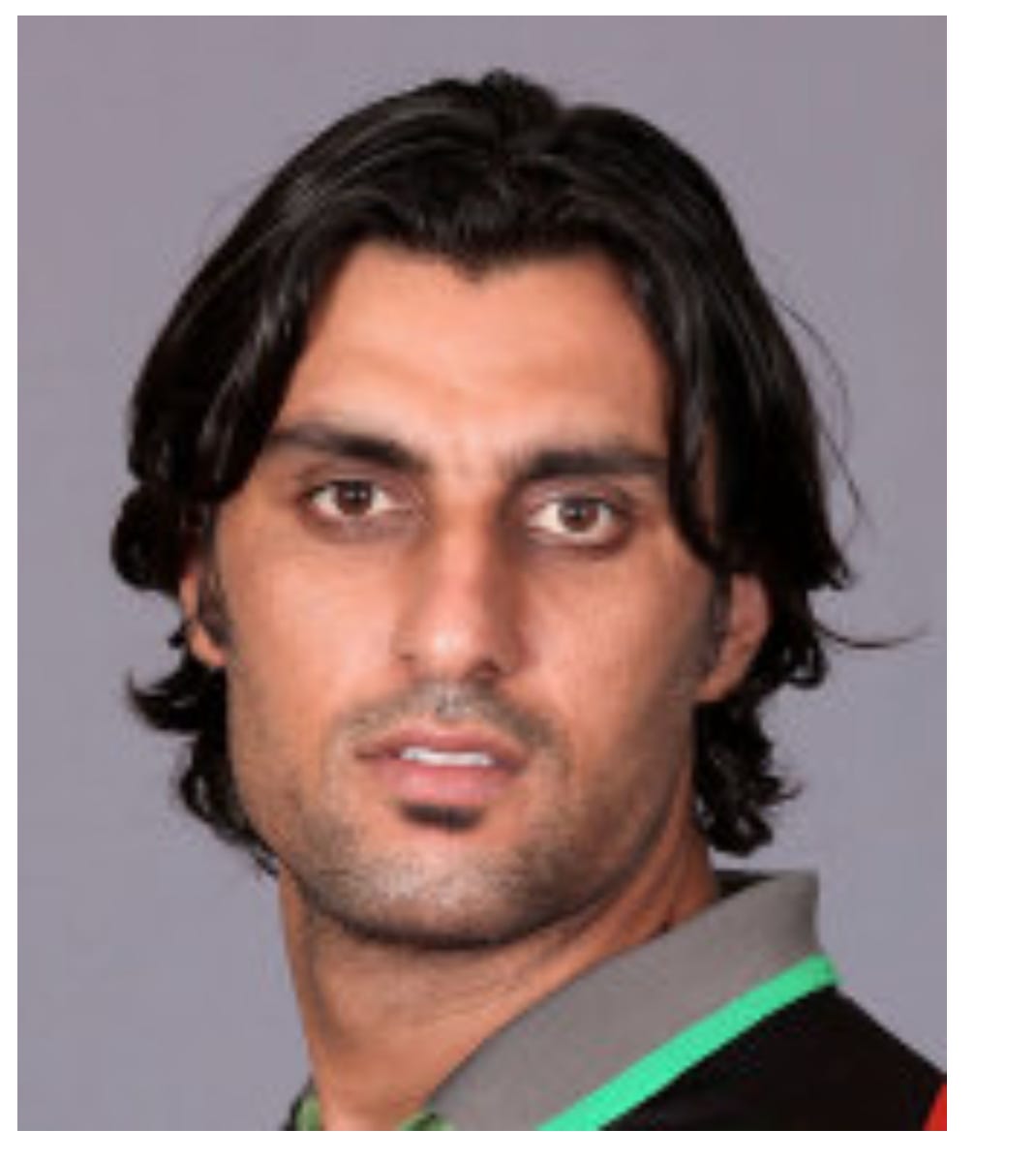
The towering figure of Shapoor Zadran was Afghanistan cricket’s first true poster boy - a long-haired, larger-than-life fast bowler who carried his team from dusty refugee camps to the global stage. His death from a rare illness, a day before his 39th birthday in India, has left Afghan fans in tears, and touched the wider cricketing world.
For those who followed Afghanistan’s improbable rise in international cricket, Zadran was not merely part of the story - he was its personification. The headband, the flowing hair, the long, rhythmic run-up and the explosive release: he looked every bit the fast bowler from a different era, a throwback to when pace was theatre as much as technique.
Zadran was fast and furious on the field. Eyes locked on the target, he charged in with long, rhythmic, almost regal strides. He did not glide; he attacked the crease. For Afghan fans, especially in the early days, watching him bowl was to witness a kind of defiance - a refusal to be invisible on a stage dominated by cricket’s traditional powers.
It was a surge to surmount obstacles too. Zadran belonged to the first generation of Afghanistan’s cricket pioneers - young men who discovered the game not in structured academies or lush outfields, but in the harsh, uncertain reality of displacement. Many of them, including Zadran, were raised in Pakistan’s refugee camps during decades of war at home. It was there, amid dust and deprivation, that cricket took hold - improvised, shared, and cherished.
When these young men returned to Afghanistan, they brought the game with them, carrying bats and balls into a country rebuilding itself in fragments. Zadran stood at the heart of that transformation, lending Afghanistan presence on the field, legitimising them as an emerging cricket force. Off the field, however, he was the very opposite - warm, witty, disarmingly gentle, carrying himself with a quiet humility. His smile came easily, and his humour softened the most serious conversations.
I first met him in Karachi, where Afghanistan were holding a training camp ahead of the 2015 World Cup in Australia and New Zealand - a defining chapter in their cricketing journey, when every major tournament felt like both an achievement and an audition.
Karachi’s coastal heat was relentless, but Zadran seemed unfazed. He ran in again and again, pounding the pitch with determination, working on his rhythm, his swing, his control. When I asked him about his expectations for the World Cup, he spoke with grounded confidence of his pride in representing Afghanistan on one of cricket’s biggest stages and his belief they belonged.
After the formal interview, our conversation drifted into more personal territory. When I mentioned my village, Sharana, in Afghanistan’s central highlands, his face lit up with recognition and warmth. Calling over a few teammates, he began to share a story - one that revealed far more about the roots of Afghan cricket than any statistic or match report ever could.
As he told it, in those early days, their group of young Afghan players in Kabul had little more than ambition. Resources were scarce; equipment was limited; even securing regular meals was a challenge. Yet their passion for the game kept them going. Then came an unlikely source of support - a modest, old hotel in Kabul’s bazaar that began to host and feed them.
The arrangement was simple and deeply human. The players would stay overnight, eat whatever was available - sometimes fresh, sometimes leftover - and in return, they would continue to pursue the game they loved. For a couple of years, this arrangement remained in place, neither a sponsorship nor a program - simply an act of generosity, and of belief in this group of young men.
When Zadran revealed that the owner of that Sharanwal Hotel was from my village, he did so with a wide, knowing smile. In that moment, the vast and often fractured geography of Afghanistan seemed to shrink into something intimate and interconnected. Stories like these help explain why Afghan cricket resonates so deeply with its people. This is not just a team assembled through systems and funding; it is a collective born out of struggle, sustained by community, and carried forward by individuals who refused to give up.
Beyond villages and borders, the Afghan team’s rise captured imaginations across the cricketing world, their journey too compelling to ignore. For many Afghans, particularly those in the diaspora, cricket became a source of identity, a reminder of connection, and, at times, a rare cause for collective celebration in stadiums from Multan to Melbourne. So Zadran’s passing is not just the loss of a former international cricketer, but of a symbol of how far Afghanistan has come. In mourning him, we remember our dreams of something better, partly realised but also abiding.
It is these stories that are the heart and soul of any sport and in your case, Shadi Saif Khan , help tell the story of a wonderful young cricketer. Beautifully written and keep telling us about your country and its sport. Probably the only way we can get the real picture.
Sad event but beautifully told story. We don't appreciate just how hard it is for cricketers on the sub-continent, including India, to rise to international level given the very basic level of grounds, pitches and equipment they have at their disposal.