


Today is MS Dhoni’s forty-fifth birthday. He has not played a competitive game since May last year. He now spends most of his time appearing, investing, endorsing, encouraging, and generally being genuflected to. Having given up Test cricket in 2014, he has confined himself the last six years to the Indian Premier League, but last season was stricken by a slow-healing calf injury. He was constantly rumoured to be on the brink of selection. He was hitting it well! He bowled in the nets! His return was delayed, then delayed again, then finally scrubbed altogether. Early on, he was going to games with the Chennai Super Kings squad, until the distraction of his mere presence grew too great. Yet he nominally remains an active player. Is there more? Captain Ruturaj Gaekwad recently gave an update on Dhoni’s future, which was….he didn’t know.
‘Cult of personality’ has been an expression widely used in the context of Ben Stokes’s ascendancy. Indian cricket says: hold my beer. As Mandela became Mandiba, so Dhoni is now Thala - Tamil for ‘leader’. Whether or not he’s playing, every CSK home game takes place before a sea of humanity wearing replica shirts bearing the number 7. No-one dares say he should retire; it’s only permissible to say he shouldn’t. What gives? If you inhabited an echo chamber of sycophancy, I dare say you’d probably learn to enjoy it too. But it also suits everyone for Dhoni to stick around, so much of CSK’s brand, sponsorship structure and potential resale value is vested in Dhoni; he is almost worth more dead (not playing) than alive (playing), non-performance obviating the risk of underperformance. Fans can ascribe CSK’s bottom-bumping season to Dhoni’s absence; Dhoni’s adjacency offers the hope of success without real change or reform.
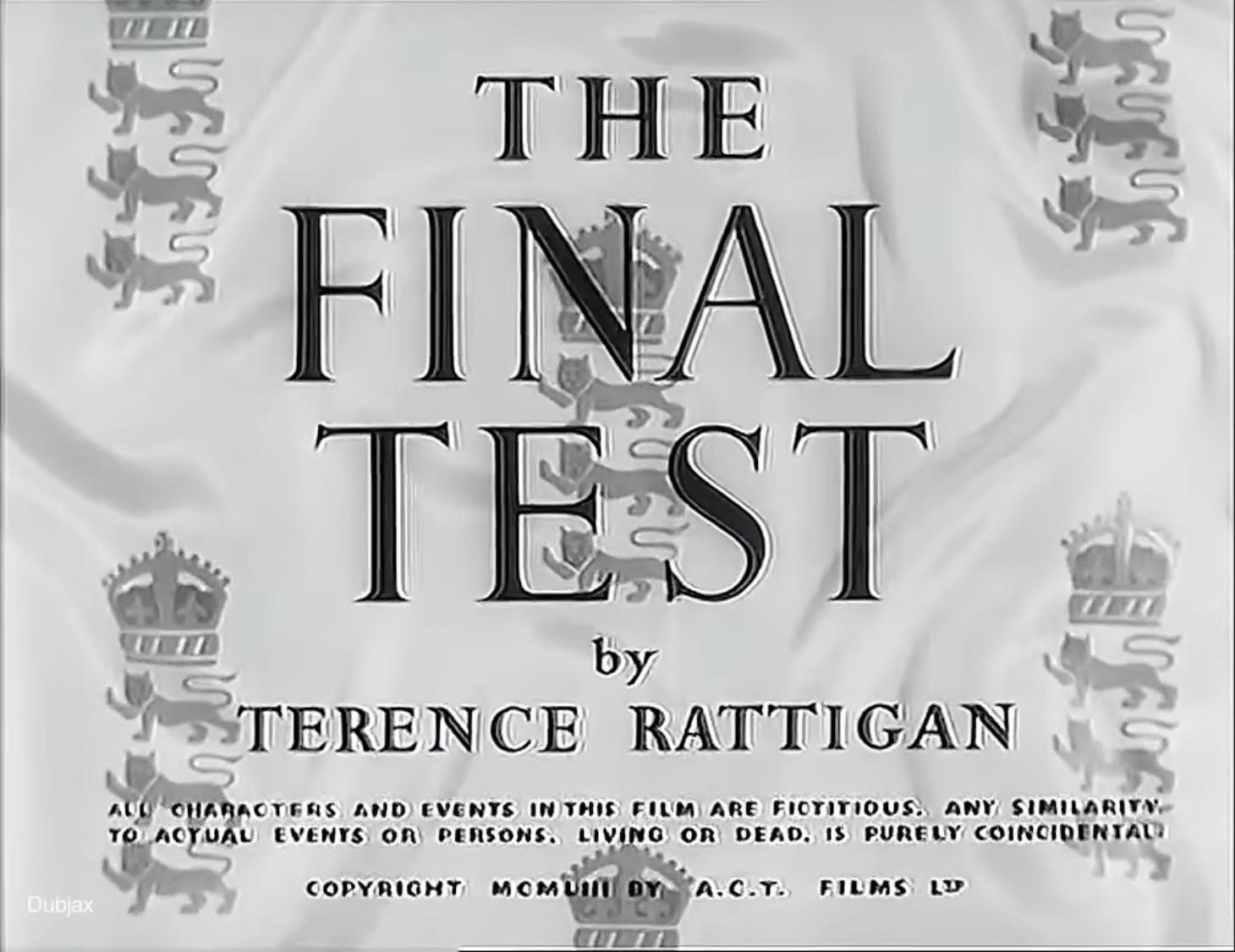
Retirement, eh? It used to be so simple. You got old, you lost a bit, you saw the end, you took your leave. Sporting mortality was, of course, unavoidably seasoned with melancholy. In Terrence Rattigan’s The Final Test (1953), the veteran Sam Palmer, with his meditative pipe and aldermanic girth, faces what looms as his last Test at The Oval with a mix of resignation and chagrin. ‘The trouble with making a game of profession is that you’re at the top too young,’ he muses. ‘The rest of the way’s a gentle slide down. Not so gentle sometimes. It makes one feel so ruddy useless and old.’
Yet I realised watching it again last night that Palmer never actually retires. He never mulls over an announcement; he does not conclave with his agent and sponsors. Rather does he fend off inquiries (‘How old are you, Sam?’; ‘None of your business’) and deflect blandishments (‘Just wishing I was 20 years younger’; ‘Don’t worry Sam, you’re just as good as ever you were’). It’s essentially the crowd that calls time: when Palmer is out for a Bradman-esque duck on the stroke of lunch on the final day, spectators spontaneously swarm the field, chorusing their acclamation to the balcony. Palmer’s in no position, really, to say: ‘Oh, reckon I might go on playing a bit of white ball stuff, then I’ll see how I feel about the two Tests in Bangladesh, and I’m available for The Hundred draft’. He knows the time is ripe, and by the end of the film, shares with his son a sense of hope in the lifted burden (and also the promise of love contained in a romantic subplot):
You know, it’s a funny thing, Reg. When Sid Thomson lifted his finger this morning, I thought to myself: “This is it, Sam Palmer. This is the finish.” But you know, I’m just wondering whether it wasn’t really the beginning.