

Mustafissure
SS on an alarming crack in the cricket world

On 3 January 2026, the Board of Control for Cricket in India issued a quiet directive - in doing so, it crossed a line that cricket has managed to maintain for over a century. The BCCI ordered Kolkata Knight Riders to release Bangladeshi pace bowler Mustafizur Rahman or “Fizz” from their IPL squad, citing vague “recent developments” and “deteriorating diplomatic ties.”
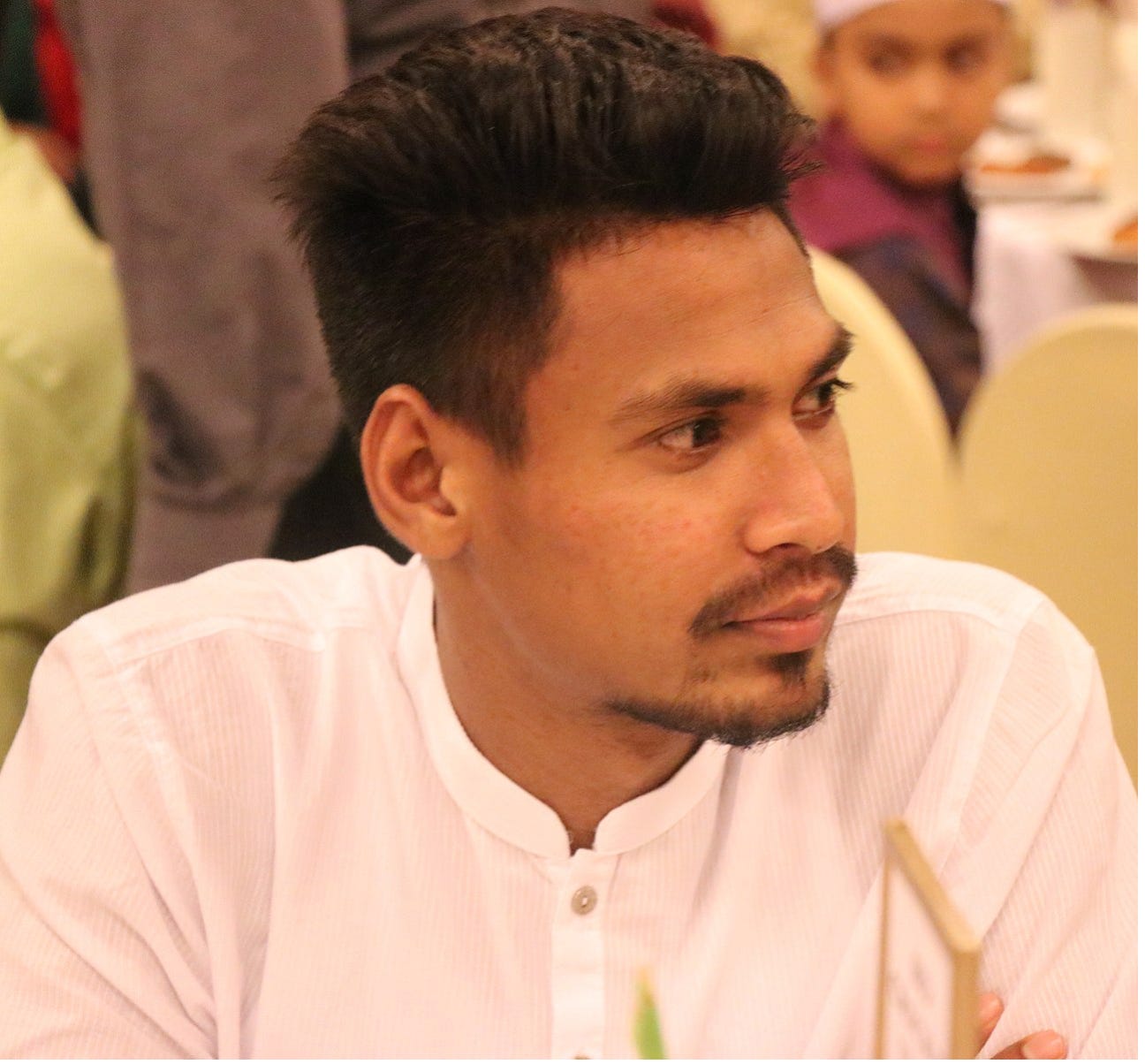
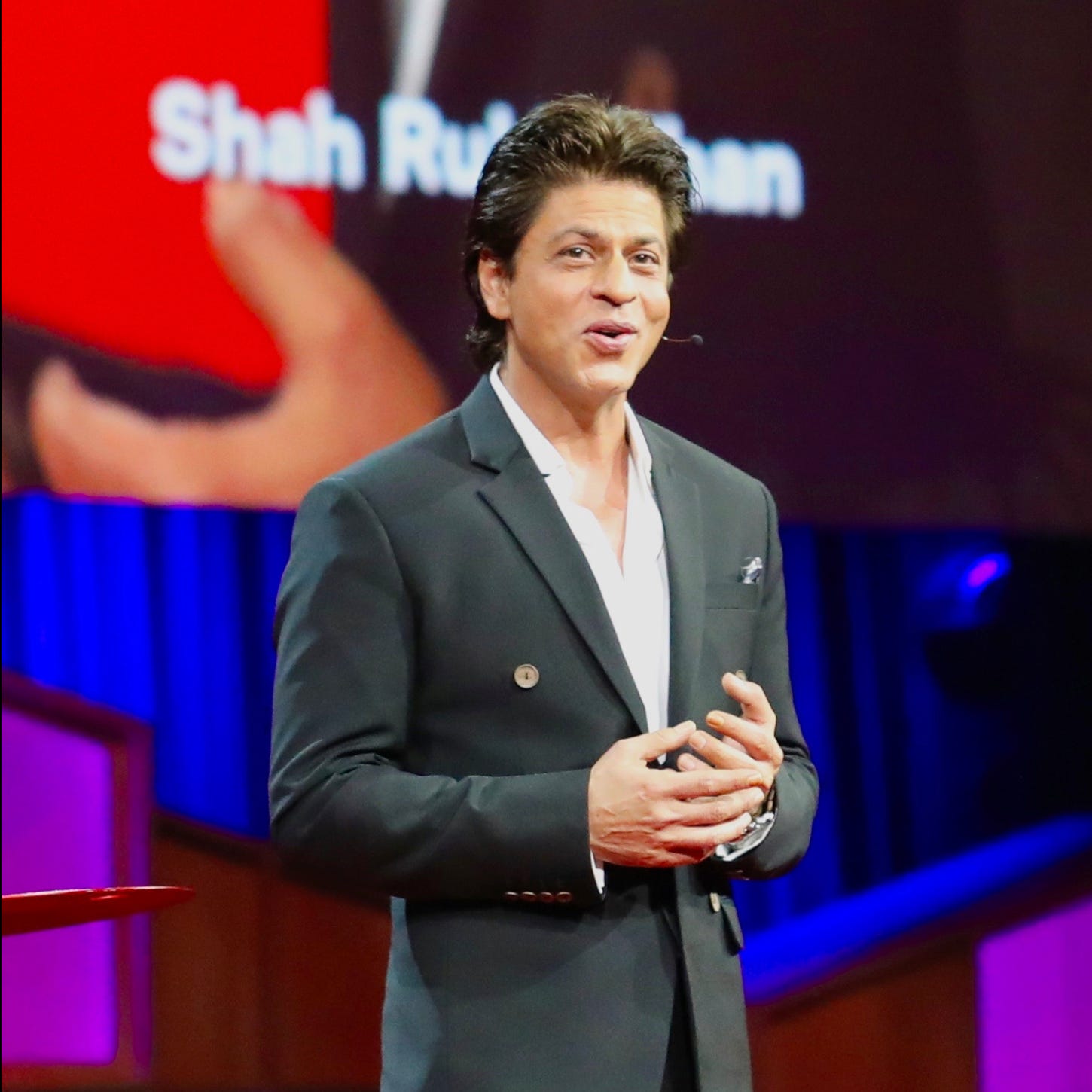
The timing could not have been more revealing. KKR had just acquired Rahman for Rs 9.20 crore ($US1.02 million)—the highest ever paid for a Bangladeshi player in the league’s history—making his sudden ejection not merely an administrative convenience but a deliberate political statement. He was, notably, the only Bangladeshi cricketer in the entire 2026 IPL season. But the real attack, the one that reveals the machinery of modern Indian majoritarian politics, was not directed at Bangladesh. It was aimed at Bollywood superstar Shah Rukh Khan, arguably India’s most famous and beloved Muslim figure.
A few days back, pro-Modi Hindu nationalist figures and political supporters unleashed a coordinated assault on Khan for KKR acquiring Rahman. BJP leader Sangeet Som declared Khan a “traitor” for signing a Bangladeshi player, warning that money earned by Rahman would flow to terror camps in Pakistan. Shiv Sena leaders demanded a blanket ban on all Bangladeshi and Pakistani cricketers playing in India. Pro-Modi Hindu religious leaders joined the fray, calling Khan’s “stance consistently anti-national” and “questionable.” One called for his tongue to be cut out.
The official rhetoric from the Modi government that had overwhelmingly centered on atrocities against Hindus in Bangladesh was now weaponised. Yet no one asked why Khan, himself Indian and whose family fought against British colonialism, should be held responsible for Bangladesh’s internal affairs. No one acknowledged that Modi hosts overthrown Bangladesh leader Sheikh Hasina in Delhi, or an Indian diplomat meets the Islamist Jamaat-e-Islami leader in Dhaka but requests him to keep the meeting secret. Or why Modi’s foreign minister travels to Dhaka to attend Begum Zia’s funeral. The answer is simple: Khan is Muslim, and in Modi’s India, that is liability enough. This is not random targeting. It is a leaf from an old playbook.
The precedent was set sixteen years ago. After the 2008 Mumbai terror attacks, the IPL franchises with players from Pakistan quietly consented not to inviting them back. A ban was effectively imposed - absolute, irrevocable, enduring through multiple political transitions, economic booms, and evolving security assessments. Pakistani cricketers, once regular fixtures in the league, simply ceased to exist in Indian cricket’s official imagination. Even legends like Wasim Akram found police verifications a harassment to continue coaching at the IPL. When asked why, the responses were coded: security concerns, government directives, public sentiment. In practice, the message to South Asia was unmistakable. Challenge India, and we will erase you from our most beloved sport. This was cricket as coercion, not competition.
But the Mustafizur moment reveals something darker still. It exposes how India’s descent into Hindu-majoritarian politics has corrupted the sport. The BCCI, theoretically a sporting body, is now an integral part of Modi’s establishment. India’s Foreign Minister Subrahmanyam Jaishankar has explicitly compared diplomatic strategy to cricket tactics, suggesting that India should think like a competitor seeking to outmaneuver rivals.
The metaphor has become literal. The BCCI does not merely administer cricket; it enforces ideological conformity. Consider the context of local Indian politics. West Bengal, where Kolkata Knight Riders is based, faces state elections in early 2026. The ruling BJP sees an opportunity to polarise Hindu sentiment in the state, conflating killings of Hindu with an entire nation and anyone who does business with it. A top BJP leader in the state has already demanded that India should do to Bangladesh what Israel has done to Gaza. By directing KKR to release Mustafizur, the BCCI handed the BJP a political victory in a critical election battleground, further disguising their attack on Khan as a patriotic gesture.
The BJP’s assault on Khan is not new. It resumes a long campaign. His son Aryan was arrested in October 2021 in a drug case aboard a cruise ship and spent nearly three weeks in jail before the Bombay High Court granted bail. The case eventually collapsed entirely; India’s Narcotics Control Bureau filed no charges in May 2022. Yet the arrest itself had served its purpose: it dominated headlines, raised questions about Khan’s character, and demonstrated that even Bollywood’s most celebrated Muslim figure could be targeted with impunity by India’s law enforcement apparatus. That case bore all the hallmarks of politically motivated prosecution, complete with a narcotics officer later accused of demanding bribes and fabricating evidence. Khan had pleaded for top lawyers to defend his son; the machinery of the state had ground his celebrity into ash. The Mustafizur controversy is the sequel to that persecution.
The broader implications extend far beyond Khan or even bilateral India-Bangladesh relations. They point to a fundamental corruption of cricket’s character as an international sport. Pakistan’s experience provides the template. The Mustafizur moment has accelerated Bangladesh toward the same threshold. Pakistan is already scheduled to play all its 2026 T20 World Cup matches exclusively in Sri Lanka, as a response to India refusing to play cricket on Pakistani soil. Bangladesh Cricket Board officials have already begun petitioning the International Cricket Council to shift all Bangladeshi matches out of India for the same tournament, citing the Mustafizur precedent as proof that individual players cannot be protected. If one Bangladesh player is unsafe in Kolkata, they reasoned, how can an entire national squad be safe in the city hosting them for three matches?
The Bangladesh Cricket Board had issued a media release on Friday, stating that they will host India for three ODIs followed by three T20Is in the first week of September. However, BCCI has now decided to put the series on hold and will seek Indian government approval before taking a final call. That’s not cricket. Or, well, it is as the game is presently constituted.
Effects may cascade from here. If India can exclude Bangladesh’s sole IPL representative without facing meaningful consequences, and if players of Pakistani heritage face systematic visa delays like Usman Khawaja in 2023 and England’s Shoaib Bashir in 2024 and, the logic extends easily to other nations and religions. These are not isolated incidents. They represent a pattern: as India’s domestic politics have become increasingly Hindu-majoritarian, Indian institutions have begun weaponising visa policies and sports administration to coerce and punish.
The BCCI’s role in this transformation cannot be understated. It is not a neutral administrator. It is a board captured by a political party and deployed as an instrument of its politics. When the BCCI decides which cricketers can play on Indian soil, it is making political, not sporting, decisions. The ICC, furthermore, is now fully controlled by India, and other cricket boards have proven unwilling to intervene, perhaps understanding that challenging the BCCI is impossible.
India’s cricket dominance now poses a threat to cricket itself. Cricket is supposed to be a multi-national sport, a space where competition is divorced from ethno-nationalism and petty politics. Yet when a board can dictate player releases based on foreign policy concerns, when visa policies become tools of religious discrimination, when franchise owners face political pressure for signing players from neighbouring countries, cricket ceases to be sport. It becomes an extension of majoritarian nationalism.
The very foundation of international cricket—the principle that players and teams move freely across borders, that talent supersedes nationality, that the sport transcends geopolitics—is beginning to fracture. India’s current regime has made clear that it does not accept this premise. For Modi’s nationalist project, cricket is too important to remain apolitical. It is a stage on which Hindu nationalists can perform their dominance. It is a territory to be controlled, not shared. It is a weapon, not a game.
Unless the international cricket community intervenes forcefully, the Mustafizur moment will not be the last time a player is sacrificed at the altar of majoritarian politics. Pakistan is already exiled. Bangladesh is being shown the door. Next could be Sri Lanka or Nepal, depending on which regional crisis Modi’s government decides to politically exploit. Tomorrow it could be even Australia and England on the pretext of giving space to Sikh separatists or for speaking about human rights in Kashmir. The Pakistani diaspora within these countries is already vulnerable; the questions raised by Usman Khawaja’s farewell presser are still fresh.
The machinery is now in place, tested and proven effective. And no one—not the ICC, not the boards of other cricket nations, not the global media—has demonstrated the will to stop it. Until they do, cricket will continue its degeneration from sport into animosity, from a space of universal passion into a tool of majoritarian coercion.
 | A guest post by
|
Responding to some comments in general here, which I should have perhaps added in the main piece: If it was a point of principle about the state of religious minorities in a Muslim-majority country, then the players from Taliban-run Afghanistan would have been banned first by BCCI. Instead, New Delhi welcomes Taliban leaders without even mentioning women's rights and education even once, not even perfunctorily. So it is purely about BJP's domestic political agenda against Indian Muslims and forthcoming elections in West Bengal. It is not a principled position.
ICC is in the clutches of the BCCI
BCCI operates within the machinery of the BJP
The rest of the cricketing world are mere spectators
Where is the leadership?