

Once again misfortune has humped my leg
PL on a famous Australian novel and the catastrophic Bazball expedition

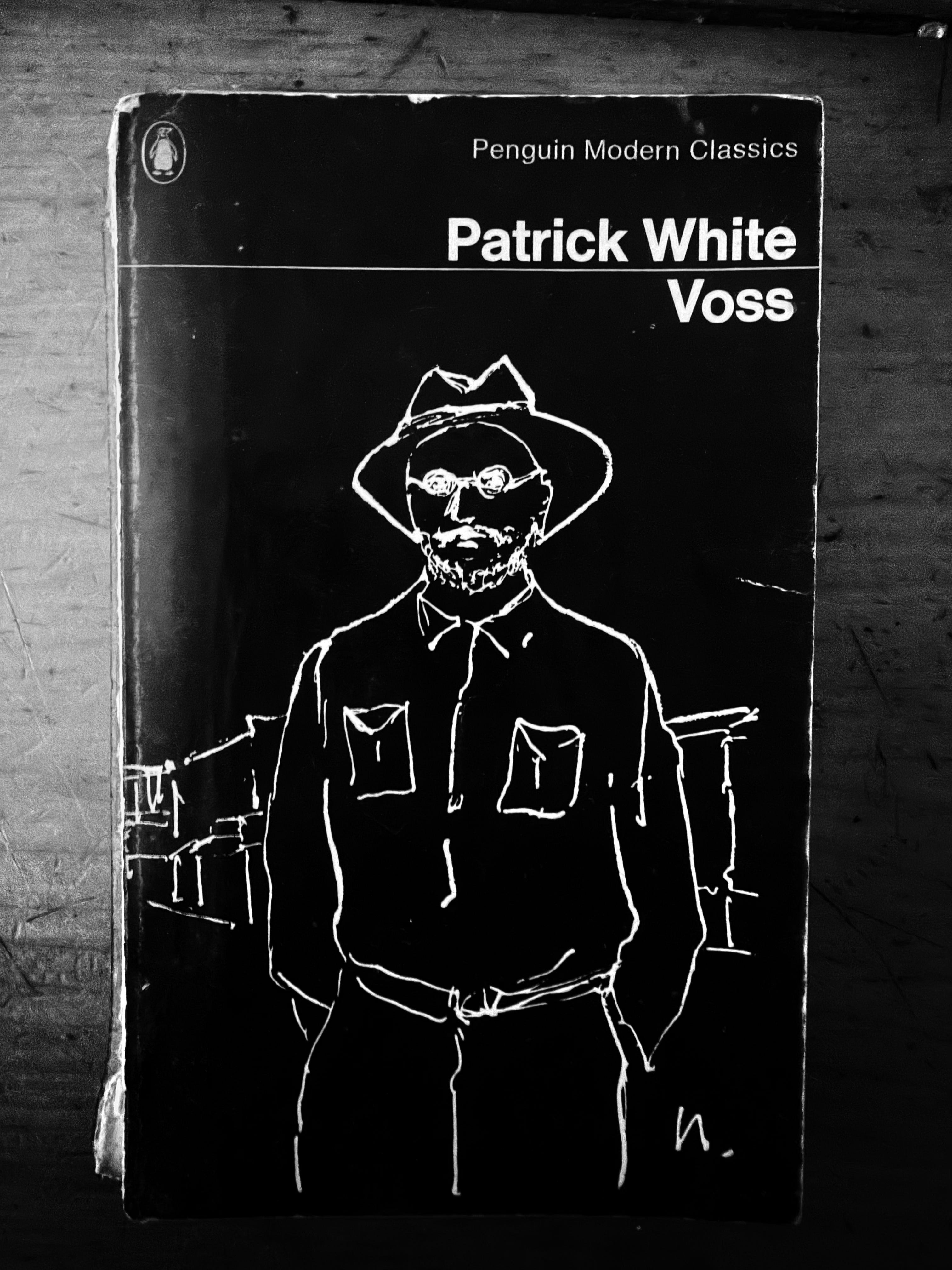
My high school English teacher, Leila (Howland) Bryant, died last year. Her family contacted me while I was in Portugal, and it was an honour to contribute a eulogy of sorts to the service in Bendigo. That poor woman was tasked with attempting to introduce a bunch of smugly ignorant Bendigo boys to novels, poetry and the written word. There were four of us in her English Lit class, three by the end of the year, but she pushed on, undeterred by the width and depth of our adolescent stupidity.
This summer, I’ve been watching Ben Stokes various stoic agonies as he grimly led the English team from one ignominious defeat to another, and found myself thinking back to Patrick White’s Voss, a book we studied in our final year at school so many years before. I recall lying on a hammock strung between the shed and a spindly willow tree in our Kennington home during the 1979-80 summer, suffering through all 448 impenetrable pages. I was 16. God, it was a punish. White somehow managed to make the novel, based on Ludwich Leichhardt’s attempt to cross the central desert in 1848, as gruelling as the failed expedition itself.
Leila, patiently and gently, led the small donkey-pack of boys in her English Lit class toward an understanding of the work’s metaphysical layers. I am forever indebted to her for unlocking that world for me. I think I may have read Voss half a dozen times now. I even gave it a spin while hunched by a kerosene stove in a goat herder’s hut on the side of a mountain, which now overlooks the Himachal Pradesh cricket ground (hang in here, there’s more cricket coming).
The copy I had at school sold for $2.95. It’s heavily, if not excessively, annotated, and amidst all my scrawl on the title page, in a shaky hand, is Patrick White’s signature. In 1981, I’d gone down to Melbourne Town Hall because the author was due to speak there at what I’ve just discovered was the inaugural meeting of the People for Nuclear Disarmament group.
I remember White, who’d served as an intelligence officer in WWII, referring to the bombing of Nagasaki and Hiroshima as “the horse and buggy days of nuclear weaponry”. I was too intimidated to approach him after the event, but a friend grabbed my book and ran forward to get his autograph. Bravely following in her wake, I had a brief conversation with the man who is Australia’s only winner of the Nobel Prize for literature. He said he didn’t like the book anymore because someone, from memory he said “the Germans”, had made a mess of the movie rights.
Keep reading with a 7-day free trial
Subscribe to Cricket Et Al to keep reading this post and get 7 days of free access to the full post archives.