

The Sleepwalkers
GH sees a system under stress

Cricket Australia’s push to privatise the Big Bash League has now been running almost a year, commencing with a report Cricket Australia declines to share, continuing along lines the parties are loath to divulge, towards ends nobody can foresee except that there might be a buck in it.
One has waited all the way through for the knockout argument, the display of overpowering, relentless logic that routs the sceptics like Athers, Gilly and Greg, and lights the way. It has not come: rather have the same dreary propositions been rerun. The IPL is scary big! The television money is running out! We need to be able to afford Tim Seifert! But how necessitous are Australian cricket’s circumstances, really? Sure, everyone would like a bit more cash, but what are the urgent expenditure items we cannot currently afford, and is a one-off asset sale at the expense of long-term revenue and upside the only way to pay for them? As economists Matthew Lilley and Patrick Ferguson argued in The Australian Financial Review at the weekend:
More generally, as economists, we’re sympathetic to the general case for privatisation: profit-maximising firms compete to deliver better services at lower cost. But professional cricket isn’t an electricity network nor a standard competitive market, and these arguments fall badly apart when considering the Big Bash League….
This is not a sport starved of cash, and there is no clear financial evidence for the claim that Cricket Australia must sell permanent equity in its best commercial asset to secure its future. Nor is it obvious that Cricket Australia has a pipeline of credible investments that would concretely grow the game enough to justify doing so. It is unclear what additional spending, beyond what Cricket Australia can already afford, would meaningfully purchase.
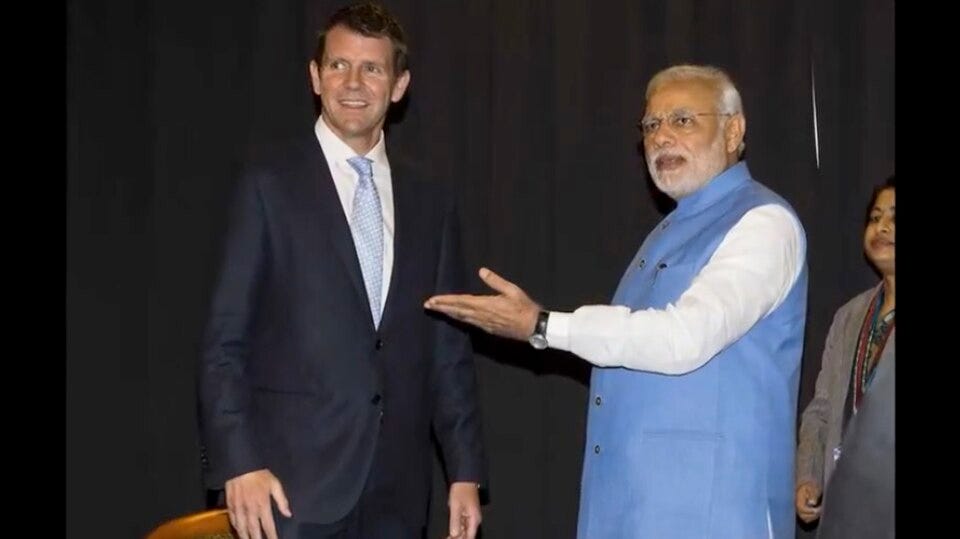
Lately, there has been evidence of a new argument: in its favour is that Cricket New South Wales has set out a stall against it. Never bet against parochialism in Australian cricket. It is always lurking. New South Wales, populous, prosperous and privileged, courts resentment in all sorts of ways - at the selection table, in the schedule, in the queue for the corporate dollar. Its chairman John Knox shivved two Cricket Australia chairs, Earl Eddings from Victoria and David Peever from Queensland. Never mind that both were hopeless. Just as no-one is completely unhappy at the failure of their best friend, so nobody in Australian cricket is altogether displeased by New South Wales finishing second. It’s all right for them, you can hear the other states brooding: they are rich; we are poor as church mice. West Australia has the WACA to pay for, Victoria would love to get shot of the money pit Renegades, Queensland complain that nobody understands their particular needs, and South Australia live in a world of their own. Cashing out of the BBL would save them thinking too hard about their own businesses and governance models, and the individuals concerned won’t be round to deal with the consequences five to ten years round the track, even if they may not have a plush corporate job to slot into like CA chairman Mike Baird.
Individually, I suspect, everyone understands the counterarguments full well: the sacrifice of sovereignty, the risk to our red ball culture, the introduction of parties whose interest is in profit rather than in Australian cricket. But on these it is hard to place a value while the privatisation lobby is free to harp about price. Don’t underestimate the sway of the sight of others falling in and the difficulty of ignoring a bag of money being waved in your face - the Abilene paradox and torschlusspanik at work. So the other states continue sleepwalking, a bunch of rubes ripe for the plucking.
We’re getting to the point now where the best argument for privatisation is starting to become the muddling hopelessness of the existing system that this debate has reinforced - Australian cricket’s lazy monopolism, lack of accountability, tendency to factionalism and opaque decision making. Because irrevocable calls are here being made by a self-perpetuating elite, nominally on behalf of a public with no say in their outcome, that is heavily invested in the season as it is presently constituted, that on the evidence of the last few summers is not impatient for change, that feels a sense of proprietorship over the game it may not be keen to cede to foreign investors. Lilley and Ferguson conclude their survey damningly:
If Cricket Australia does not feel able to run the BBL in the interests of Australian fans and the long-term health of the Australian game, the answer is not to sell the BBL. It is to fix Cricket Australia.
And that raises a sharper question than those presently being asked. If leadership at Cricket Australia cannot faithfully steward a cricket league in the interests of Australian cricket, why are they running Cricket Australia?
CA’s besetting sin, then, may not be so much avarice as naivete - the failure to grasp how this process would destabilise and undermine its own claims to authority. Because there’s a sense that whatever the outcome, the way we do things at present cannot be the way we do them in future.
The Fin Review article sums it up very well. The push to privatise has not been accompanied by any serious attempt to explain why such action is warranted and what the benefit will be. CA have put forward a solution without really saying what the problem is, nor how the proceeds from the solution will be invested. The complete absence of any attempt by CA to engage with the cricket following public is also a sign of arrogance. CA should be asked to answer the points raised in the concluding para of the Fin Review article! Why aren’t they capable of running cricket?
A privatised BBL risks being as soulless and confected as LIV golf
https://www.newyorker.com/news/the-lede/liv-golf-is-dying-of-boredom