

"They said I was a killer....."
GH on a century of Larwood

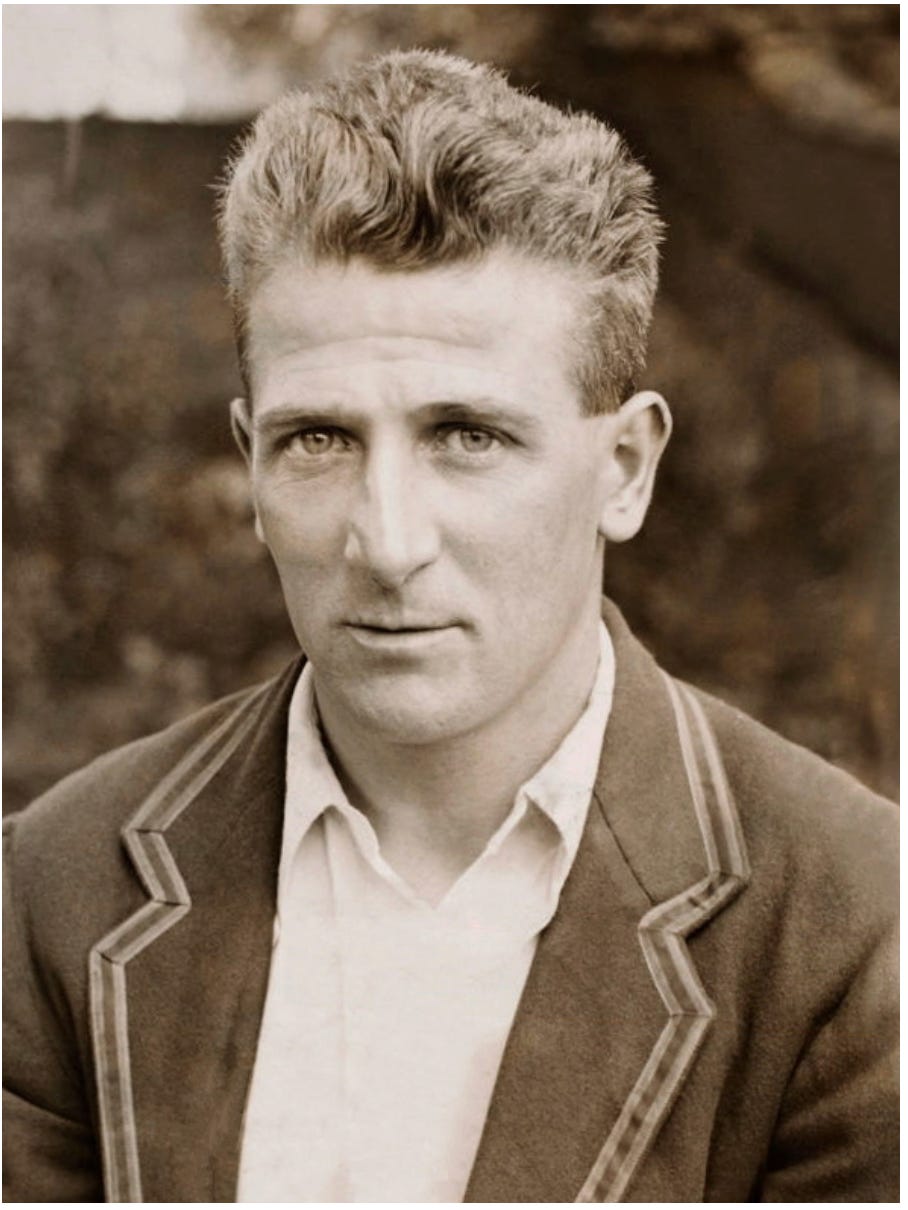
This week marks a hundred years since the Test debut of Harold Larwood. The Cricketer have put him on the cover and are staging an event. Glasses will be raised during the Test at his old home ground of Trent Bridge. His reputation as may even be growing, his biography being regarded as a landmark, his statue in Kirkby having been complemented by casts of Bradman and Voce, his contemporary appeal enduring. He would, I was reflecting the other day, hardly have been a believer in alcohol bans when his skipper Douglas Jardine used to ply him with champagne at drinks breaks. Anyway, here’s a tribute I wrote a few years ago, as his star power grew.
In the years after he settled in Sydney, the humble Kingsford home of Harold Larwood became a place of pilgrimage for English cricketers, especially those mandated by nature to bowl fast. They usually came away twice marvelling - at the pocket of English patriotism to be found just five kilometres from the Sydney Cricket Ground, and at the seemingly frail figure who maintained it. Had this diminutive, bespectacled pensioner really been the terror of all Australia?
Nor was this merely a matter of age. When picked for England, Larwood stood just five feet seven inches tall, weighed less than 11 stone, and seemed as likely to be a source of controversy as did Michael Ramsey, born the same day and destined to become Archbishop of Canterbury. One of Larwood’s most vivid anecdotes from the Bodyline tour of 1932-33 was overhearing a little girl quizzing her mother: ‘Why mummy, he doesn’t look like a murderer ...’ Yet, as few in cricket cannot know, Larwood achieved a notoriety as Australia’s Least Wanted, of the sort usually confined to criminals; he competed for headlines with the likes of the Lindbergh kidnapper, Bruno Hauptmann, and the mobster Al Capone.
Reviewing his legend a century after his birth, one obtains a slightly different feeling, of a sense of cricket’s abiding search for a statistical and aesthetic equilibrium between bat and ball. In his autobiography The Larwood Story (1965), ghosted by Kevin Perkins, the Englishman pleads guilty to a degree of batsmanslaughter, but presents himself as acting in legitimate self-defence: ‘They said I was a killer with the ball without taking into account that Bradman with the bat was the greatest killer of all.’ Indeed, had Larwood not existed, it might have been necessary to invent him.
Keep reading with a 7-day free trial
Subscribe to Cricket Et Al to keep reading this post and get 7 days of free access to the full post archives.