


There is no gainsaying Usman Khawaja’s significance as an Australian Test cricketer; an additional mark of his stature is that he almost made you take him for granted.
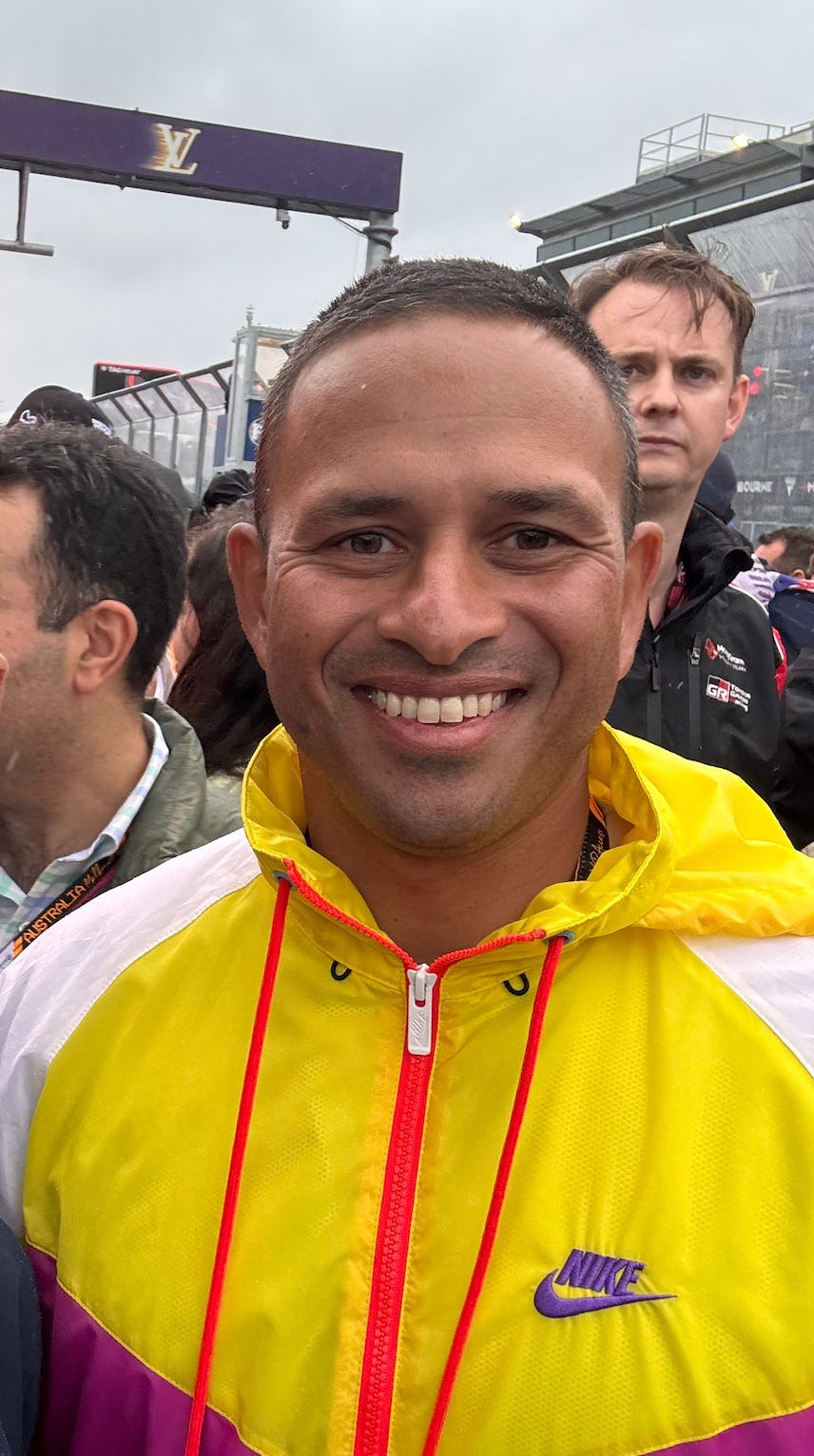
Think on it for a moment, and run your eye up and down the palely conventional list of Australia’s highest Test scorers, where he ranks fifteenth, between Mike Hussey and Neil Harvey - so various in methods yet so similar in origins. There was a recognition through the 1990s and into the twenty-first century that the face of Australia was being changed by immigration, while the face of Australian cricket remained eerily unaltered. Then, all of a sudden, fifteen years ago, Khawaja’s darkly slim figure emerged from the shadows of the Sydney Cricket Ground to pull his first Test delivery for four, and the axis of the game tilted ever so slightly.
Yet he wasn’t there for looks. He wasn’t your affirmative action pick; he wasn’t your diversity hire. He amassed big runs, and in Test cricket too. Playing no international white ball cricket after the 2019 World Cup, he became one of the dwindling band of specialists in a multi-format world, moving at his one-man tempo with his singular technique. His contemporaries Steve Smith, a batting wonk, and David Warner, a polychrome pioneer, were uncompromising moderns. In a world in thrall to power, Khawaja remained a touch-playing treat to watch, throwing back to the ancient idea of the minimum of effort for maximum of effect, even as he partook of batting’s new possibilities. As others’ check drives rocketed to mid-off, nobody in our era defended like Khawaja, his soft hands easing the ball to the ground as though comforting a patient. At the same time, he popularised the reverse sweep so understatedly it ceased to seem outre.