

Sunny Side Down
SS on Sunil Gavaskar's shrinking legacy

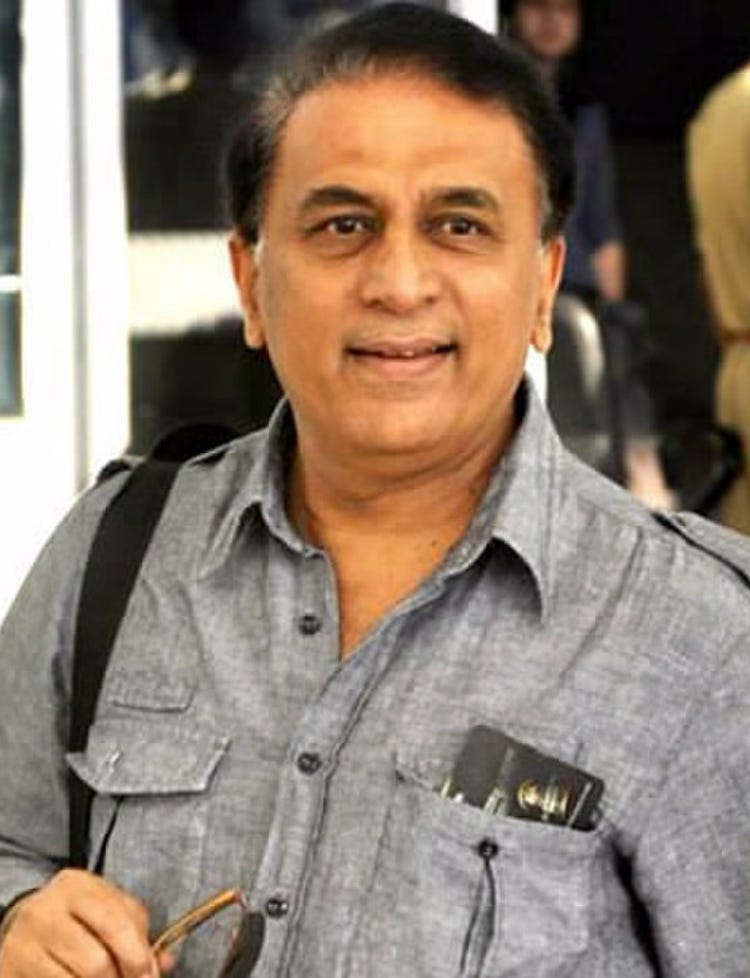
Sunil Gavaskar was a very great Test batter almost all at once. His record for runs in a debut series, 774 in four Tests in the Caribbean, still stands. For more than a decade he was the immovable reference point of Indian batting. He batted without a helmet facing the batteries of West Indian, Australian and Pakistani pace attacks through the 1970s and 1980s. Lillee, Thomson, Marshall, Garner, Holding, Roberts, Imran, Akram, and a host of other fast bowlers formed the cast that he had to negotiate, and we are talking here about some of the greatest quicks to have ever played the game. His skill against spin was visible in his final Test innings in Bangalore in 1987 against Pakistan, where even the grainy footage on YouTube confirms what every player who took part in that match has universally acknowledged about his mastery on a turning track.
The complexities of his character took longer to emerge. His batting could sink into puzzling introspection: Sunny infamously made only 36 not out in 174 balls in a 60 over World Cup match against England at Lord’s in 1975, in a chase of 335, ignoring the team management’s instructions to hit out or get out, and batting through the full quota of overs while India finished at 132 for 3. He has never really explained that innings in a convincing way, but one of his teammates revealed in a podcast that Sunny later claimed he was using the game to prepare for facing English bowlers in future Test matches. A brush with a Lord’s gatekeeper four years later contributed to a long-held dislike of the ground.
Batting always came first. In Delhi in 1979, during a Test against Australia, he refused to come out and shake hands with the Indian prime minister Morarji Desai, because as captain and opening batsman he insisted he needed to remain mentally focused in the dressing room for the innings to come. He refused to play in Calcutta at one stage, arguing that the spectators at Eden Gardens were ill mannered. Protesting an umpiring decision in Melbourne in 1981, he actually started to lead his partner off the field before being stopped by the team manager at the gate.
As Indian captain, he faced constant accusations of favouritism towards fellow Mumbai players. Sunny also cared deeply for money and made no bones about it, speaking candidly over the years about appearance fees, contracts and the business of cricket in a way that set him apart from the coyer public language of many of his contemporaries. Dilip Doshi described him as a petty tyrant `bogged down in personal likes and dislikes', and ‘either evasive or flippant’ when challenged - as, for instance, when he instructed Doshi to take more time over his overs against England in 1981-2, then left the bowler to bear the brunt of criticism for India's abysmal over-rate.
There remained, however, a certain magnanimity. Sunny started and still supports the CHAMPS Foundation, a charitable organisation to support former Indian sportspersons who have fallen on hard times. He also supports various social causes, including paediatric cardiac surgeries through the Heart-2-Heart Foundation, where he serves as Chairman of the Board of Governors. Unlike Imran Khan, he never sought sustained publicity for his charitable work and continues to keep much of it under the radar. Perhaps the most striking moment for many Indians was when he intervened during the 1993 Mumbai riots to save the lives of a Muslim family who were about to be killed outside his flat. “He told the mob, whatever you are going to do that family, you are going to do to me first and then better sense prevailed and the family was allowed to go on its way,” his son later recalled. In commentary and public speaking, particularly abroad, Sunny spoke up for India in a sharp nationalist manner, which was sometimes dismissed by his interlocutors as misplaced patriotism and at other times accepted as the idiosyncratic fulminations of a star cricketer.
Keep reading with a 7-day free trial
Subscribe to Cricket Et Al to keep reading this post and get 7 days of free access to the full post archives.
 | A guest post by
|